St. Machutus (St. Malo, St. Mawes)
Of Brittany.
November 15.
(Calendars: Sarum, York, Hereford, Aberdeen. Died A.D. 564. Sarum Ep. and Gosp.: Ecclus. xliv. 17, 20–32, xlv. 6, 7, 15, 16; St. Luke xix. 12–28.)
St. Machutus has an especial interest for us, because he is the only saint retained in our Calendar of that noble company of Celtic monks, including St. Patrick of Ireland, St. Columba of Iona, St. Columban of Luxeuil, St. Gall of Switzerland, who cleared the forests, and by their preaching and living brought Christian life to Ireland, Wales, Cornwall, Scotland, Burgundy, Bretagne, and many remote recesses of Switzerland, Germany, and France.
Welsh by nation, he was the child of his parents’ old age. He was cousin-german to St. Sampson and St. Magloire, and was educated either in Ireland or in Wales, in one of the celebrated Irish monasteries, which were the high schools and also the elementary schools of the age.
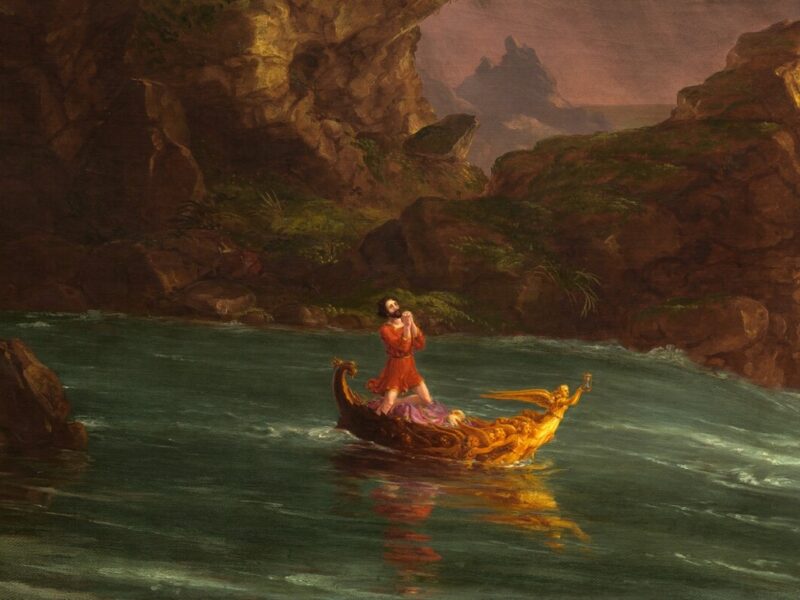
The abbot to whose care he was confided was St. Brendan. In the old lections on his festival the story used to be told to the people how, as a child, when his school-mates were playing on the sandy shore, Machutus strayed far away and fell asleep on a bed of sea-weeds and was forgotten, until his playmates, driven back by the advancing tide, regained the monastery, and the child Machutus was nowhere to be found. Then St. Brendan, the abbot, ran to the sea-shore and called ‘Machutus, Machutus,’ but no answer came. The abbot returned to his cell and passed the night in prayer, and the next morning, not in hope but in the hopelessness of grief, he went down again to the sea. From a point of rock he looked over the waves. In the morning light, and not too far off for his voice to be heard, he saw the lost child standing on a float of seaweed, singing hymns. The abbot and the boy held a joyful dialogue, until the waves bore the child near enough to reach the shore, and the two went back to the abbey together, thanking God.
The incursions of the heathen Anglo-Saxons were sweeping Roman civilisation and earlier British Christianity out of England, and Machutus and many other monks took refuge among the kindred races of Brittany (la Bretagne bretonnante). Among these were St. Sampson, first bishop of Dol, St. Magloire, St. Brieuc, St. Pol, and St. Méen. They landed on the isle of Aaron (now the town of St. Malo). Thence St. Malo made a journey to Luxeuil, to learn from the lips of his countryman, St. Columban, his Rule for his monks. St. Machutus sought solitude, but the Christians of the neighbouring town of Aleth insisted on having him for their bishop.
For forty years he lived as bishop at Aleth, near the present St. Malo. But the Breton princes were covetous and quarrelsome; there were divisions also in the Church between the bishops and their clergy; and the people appear to have been fickle.
And finally they drove their Saint away. On departing it is said he called down on the ungrateful city the maledictions of heaven — ‘not in vengeance but for their good.’
He took ship with thirty-three monks, who chose to share his exile, and landed on an island near Saintonge, where Leontius, Bishop of Saintes, gave them a large grant of land near his city. The friendly people of the city added the gift of an ass, which was to carry wood for the community. One day, the legend says, this ass was devoured by a wolf, but the wolf, at St. Machutus’ command, more manageable than his human flock, thenceforth penitently took the ass’s place, and became a beast of burden for the convent as long as the saint lived there.
Another of the glimpses of Paradise Regained, and touches of sympathy with the wild creatures, characteristic of the Celtic legends, is combined tenderly with St. Malo’s name. One hot day, when he had laid aside his outer garment for a few hours, a little bird came and made its nest in its folds. The Saint would not have it disturbed until the eggs were hatched and the nestlings fledged.
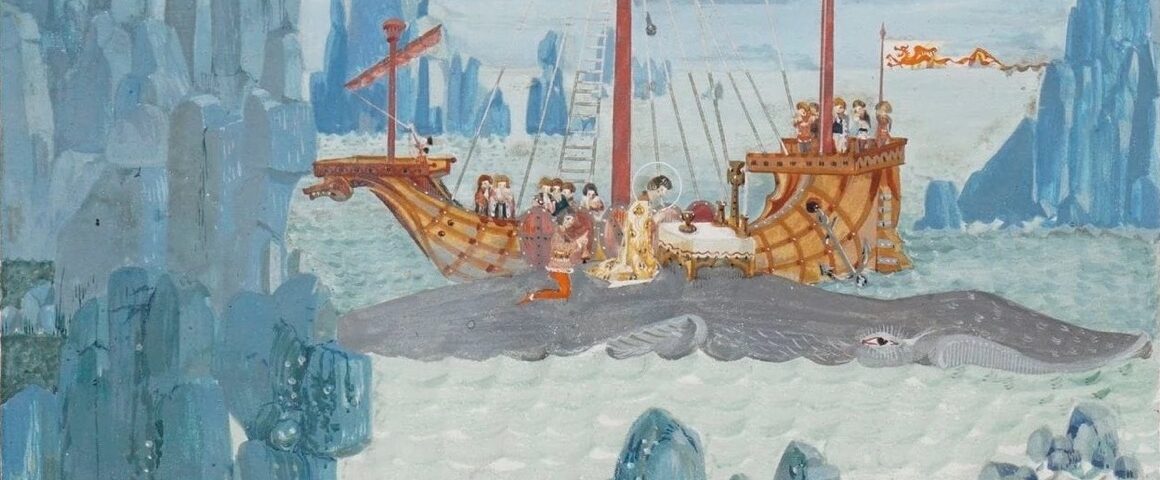
Another of these legends introduces a new character out of the animal world. St. Malo was once at sea on Easter Day, and, determining to celebrate Mass, he landed on what seemed a small islet, close at hand. The islet proved to be a whale; but the creature remained quite still until the service was finished and the Saint and his company had returned to the ship, when it plunged again into the sea.
Maledictions scarcely seem to belong to such a gentle Christian. But meanwhile his rebellious flock at Aleth, against whom he had uttered those denunciations, had been suffering from famine and pestilence and all kinds of evils; so that, at last, once more they thought of their banished bishop, remembering his blessings and his watchings, and many also of the miracles of mercy he was reported to have worked at Saintonge. And they thus sent and entreated him to return.
The merciful angels counselled him to forgive and yield.
So St. Malo rejoined his repentant flock, and the famine ceased. But after many years he returned to the friendly monks and people in Saintonge to die, at the age of 133.1
Notes
- There are various attempts at attaining this Celtic or Gaelic word in Latin forms — Malou, Macou, Mahout, Machutus. Les Petits Bollandistes and Alban Butler think ‘Maclow’ the most satisfactory, the Mac being in their opinion the characteristic portion.
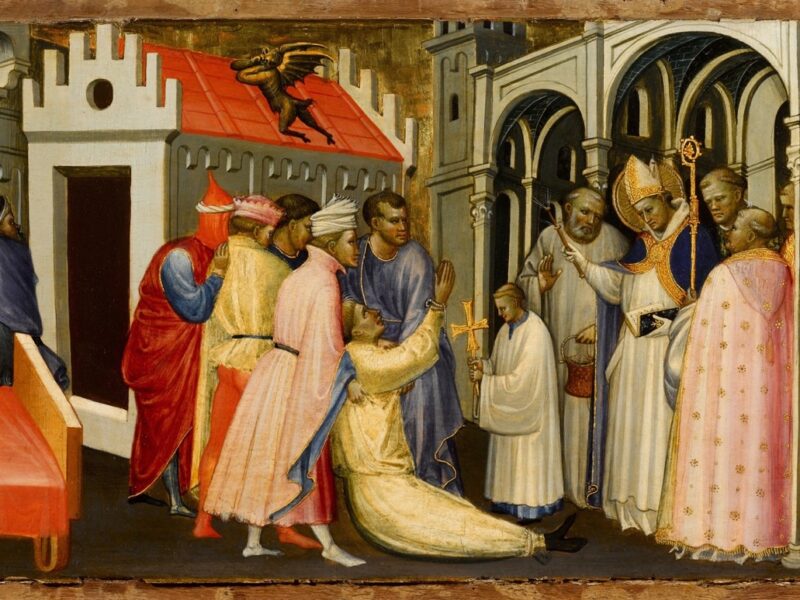
Dedications of churches: St. Mawes, in Cornwall. Represented in art as a bishop.
Source: Elizabeth Rundle Charles, Martyrs and Saints of the First Twelve Centuries: Studies from the Lives of the Black Letter Saints of the English Calendar (London: Society for Promoting Christian Knowledge; New York: E. & J. B. Young, 1887).