In 1838, Edward B. Pusey delivered two sermons before the Society for the Propagation of the Gospel (SPG) in which he strongly argued that it was the Church as an institution that had been ordained by God to convert the heathen rather than individuals as members of missionary societies.[1] It was not enough, Pusey argued, based on Romans 10:14, for Bibles to be simply translated and distributed around the globe without a teacher of the faith to proclaim the message of the gospel. It was not enough to send missionaries to foreign lands as mere individuals or agents of missionary societies, but rather they must be sent as the hands and feet of the Body of Christ with the aim of bringing the heathen into that one body. Pusey’s sermon was prescient. As one of the leading figures in the early days of the Oxford Movement, Pusey was pushing back against an Evangelical missionary movement that had become increasingly entangled with the geopolitical goals of the British Empire. While Great Britain, at the height of its imperial power, managed to launch the greatest missionary movement the world has ever seen in the 19th century, the church in England also experienced numerous setbacks to its mission that leaders of the Oxford Movement sought to address. Much has been written about the Oxford Movement and the domestic religious debates that it engendered. Much less has been written about the Oxford Movement’s approach to missions in contrast to its low-church evangelical counterpart. It would be too much to argue that Tractarian or Anglo-Catholic missions always proved to be most effective in terms of producing the greatest numbers of converts. However, the missional approach of the Oxford Movement and its heirs was consistent with its theological and liturgical reforms within the Church of England and provided a basis for enculturated ministry in foreign lands while avoiding co-option by the geopolitical aspirations of the British Empire.
In order to appreciate the missional approach of the Tractarians in the latter half of the 19th century, it must be placed within the context of the evangelical norm that dominated the century. The origin of the British missionary movement can be roughly dated to the late 18th century with the founding of the Baptist Mission Society in 1792, the London Missionary Society in 1795, and the Church Mission Society in 1799. Since Protestant churches overall did not seem to be earnest for missions, Stephen Neill notes that this was the era of “voluntary societies, dependent on the initiative of consecrated individuals, and relying for financial support on the voluntary gifts of interested Christians.”[2] The year 1807 arguably marked an even more significant date for the movement with the passage of the Slave Trade Act by Parliament, which Niall Ferguson describes as Britain’s “collective change of heart” in regard to slavery.[3] This bill proved to be the great legislative victory sought by William Wilberforce and the Clapham Sect, who had worked tirelessly for nearly two decades for the abolition of the slave trade throughout the British Empire. This monumental political accomplishment for evangelical Anglicans opened the door for further humanitarian quests for reform throughout the empire. If Britain could abolish slavery within its own empire and use its force on the world stage to stifle the practice altogether, what further evils might it abolish in the world? The British Empire now had a new raison d’etre. It did not exist for the sake of exercising power alone, but for the purpose of doing good in the world. “Spreading the word of God and thereby saving the souls of the benighted heathen was a new, not-for-profit rationale for expanding British influence. It was to be the defining mission of the century’s most successful non-governmental organizations.”[4] By engaging in humanitarian work, such as ending the slave trade, by promoting civilization among primitive cultures, and by facilitating missionary endeavors among the heathen, the British Empire sought to sweep away the sins of its past and provide an ethical basis for its global dominance. Thus began an era of missionary enthusiasm among Britain’s prominent evangelical mission agencies, which would now be operating with government support.
With the goals of the empire and the missionary movement now unified in seeking to spread both civilization and Christianity throughout the empire and beyond, a real question arose as to which goal should have priority. Should the missionaries wait for God in his providence to allow the empire to clear the way for the preaching of the gospel, or should the missionaries lead the way into the frontier to convert the heathen and open them up to British culture and the facilitation of commerce?[5] The beginning of the accommodation of evangelical mission societies to British imperial policy can be seen as early as 1816 in the closing of the Susu Mission in northwest Africa by the Church Mission Society. Freetown, in Sierra Leone, had been established in 1792 by Lieutenant John Clarkson as a pioneering town to resettle former slaves from North America. The original goal in 1807 had been for CMS missionaries to separate from Freetown and navigate further inland via the Rio Pongo River in present-day Guinea to reach the Susu people in the Susu language. The project was derailed in 1807 when the Society decided to offer its services to the British government in exchange for the protection the empire could offer.[6] This decision was made in large measure due to the fact that the Rio Pongo River was a significant corridor for Africans trafficking in slaves. The British Empire sought to patrol the area as part of its humanitarian mission against the slave trade and desired to keep the missionaries in Freetown, believing that no mission could be successful in the region until the local slave trade was shut down.[7] In the interests of accommodating these goals, the CMS decided to stay in Freetown and maintain a greater administrative role rather than pressing on to establish the inland Susu mission. “In this instance,” according to B. L. Mouser, “conversion was to follow the flag rather than to anticipate it, and to attain it within the context and protection of British imperial policy.”[8] While no one could question the intentions of the missionaries involved, such as the German Lutherans Melchior Renner and Peter Hartwig, to effectively reach the Susu people, the decision of the CMS let the British government set the agenda for the mission in exchange for their protection and support. The precedent was set for further entanglement between the two institutions as the 19th century progressed.
By the 1830s, the relationship between the British government and mission societies had grown to one of “mutual dependence.”[9] The age of social and humanitarian reform grew to its height with the complete abolition of slavery throughout the empire in 1833. This, followed by a report of brutal actions taken by the British against the Xhosa people in the War of Hintsa in the Cape Colony from 1834-36, resulted in a renewed self-consciousness in the British government about the treatment of natives around the empire. This concern gave rise to the formation of a Select Committee on Aborigines in Parliament tasked with investigating cases of abuse, aggression, or dispossession committed against native peoples.[10] The conclusion of the committee’s final Report was that “the effect of European intercourse…has been upon the whole, hitherto a calamity upon the native and savage nations.”[11] The recommendation of the Select Committee Report was to utilize missionaries as agents to mediate the interactions between British officials and native populations to ensure fair treatment and avoid unethical or inhumane actions.[12] While such self-awareness by the British Empire is commendable and the desire to remedy past abuses is laudable, such praise must be balanced against two other considerations. The first is the fact that the British government was at the same time engaged in imposing the use of opium on the Chinese population and even went to war against the Chinese government to ensure that opium flowed into that country, ensuring long-term dependence on the drug and continued profits for the British opium traders.[13] For this reason, it is reasonable to question the sincerity of these humanitarian efforts. The second consideration is the long-term effects on mission agencies when serving as the public relations agents of the British government, as the empire expanded in the name of promoting humanitarian efforts and trade abroad. The ultimate effect of the Select Committee Report, concludes Porter, was that it “confirmed the acceptability of missions to a wider domestic public and demonstrated a general recognition on the part of the societies and government that both parties could and should do business with each other.”[14] Christianity would promote the cultural transformation that would be amenable to the interests of Western production and trade, and the government would protect and support the goals of the mission agencies.
The twin goals of “Christianity and commerce” were the central foci of one of the most popular and inspiring missionaries and explorers the British Isles ever produced. David Livingstone had studied medicine, Greek, and theology at the University of Glasgow before being commissioned by the London Missionary Society to serve as a medical missionary in China in 1841. Due to the Opium War fought between the British and the Chinese government, he was reassigned to the Cape Colony.[15] Livingstone became extremely disappointed in his ministry and failed to convert a single soul during his time at the Kuruman mission due to the deep ignorance, superstition, and moral degeneracy of the African people, who seemed more interested in the magic of Livingstone’s medical knowledge than his gospel message.[16] As a natural explorer and a passionate evangelical for the cause of the abolition of slavery in Africa, Livingstone turned his attention there. Livingstone believed that through the abolition of slavery and the opening of the African continent to legitimate commerce, European civilization would come in and transform African culture away from its superstitious beliefs, such that it might be more open to the preaching of the gospel.[17] Thus, Livingstone would make his appeal at the University of Cambridge in 1857:
I beg to direct your attention to Africa. I know that in a few years I shall be cut off in that country, which is now open. Do not let it be shut again! I go back to Africa to try to make an open path for commerce and Christianity.[18]
This close association between the spread of Christianity and the growth of commerce in the British Empire in the mid-19th century helps to explain the rise of the Indian Sepoy Rebellion in 1857, which ultimately presented a severe setback to the missionary movement. India was Britain’s oldest foreign mission, beginning with the work of William Carey in 1792. It had also become Britain’s most profitable colony for trade, run by the East India Company. While the Company’s desire for profit was often at odds with the religious goals of the missionaries and reformers, Neill notes that “the rapid extension of Christian work had given some substance to the rumours that plans were on foot forcibly to convert the whole population to Christianity.”[19] This is insightful because it shows that even when the interests of the governing authority and the mission were not necessarily aligned, Indians would not have discerned the difference due to the Western approach of missionaries to the ministry. The trigger that set off the rebellion among the native Indian troops was very much a religious matter: the propaganda that cartridges were greased either with beef fat or pig fat, an offense to both the Hindus and the Muslims, respectively.[20] Thus, the culmination of all the political and economic frustrations of Indians throughout the 19th century boiled down to a matter of religion. Whether accurate or not, the Indians perceived Christianity to be a Western imperialist imposition upon their culture and customs.
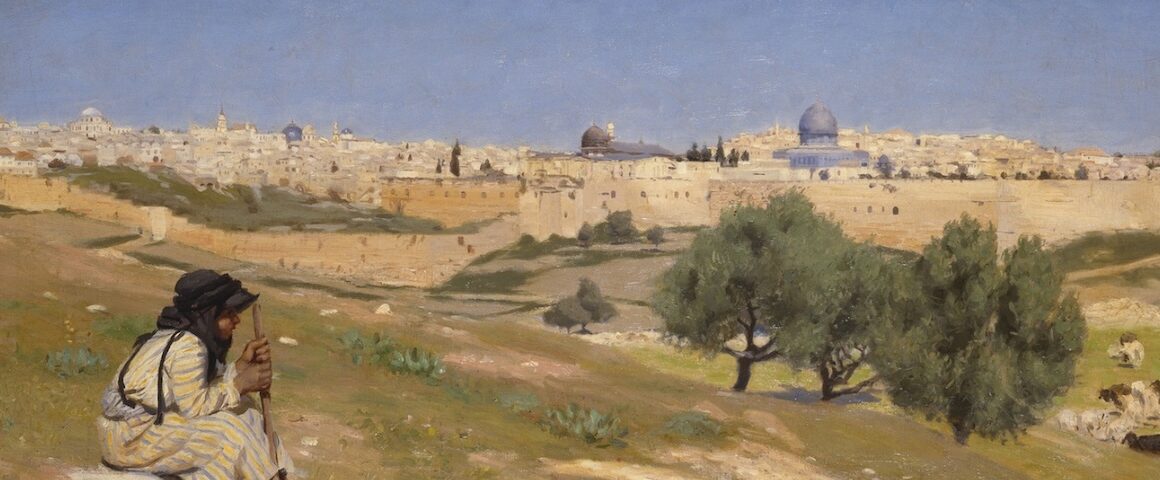
Another illustrative case of evangelical missions in the mid-19th century is the founding of the Diocese of Jerusalem in 1841, undertaken at the behest of Anthony Ashley-Cooper, the 7th Earl of Shaftesbury. Known as a social reformer and ardent Christian Zionist, Shaftesbury proposed in 1838 that Britain should work to facilitate the return of the Jews to Palestine, arguing that the British Empire would benefit politically and economically from maintaining a presence in the Middle East. At this point, the French and the Russians occupied the region and saw themselves as the defenders of the interests of the Roman Catholic and Eastern Orthodox churches, respectively, within the Ottoman Empire.[21] If the British could support a Protestant presence in the region in the name of protecting the Jewish people and their right to return to the Holy Land, both temporal and eternal interests would align, as Christian Zionists of the day believed that such a Jewish return would usher in the second advent of Christ.[22] Upon Shaftesbury’s recommendation, the British foreign minister, Lord Palmerston, authorized the mission, and Michael Solomon Alexander, a German-Jewish convert to Christianity, was consecrated to serve as the first Bishop of Jerusalem in 1841, as part of a mission work sponsored by the London Jews’ Society. In conjunction with the Evangelical Lutheran Church in Prussia, the Church of England maintained the Diocese of Jerusalem for four decades, but with very little to show for it in terms of conversions.[23] After Bishop Solomon’s death in 1845, former CMS missionary to Ethiopia, Samuel Gobat, became the second diocesan bishop of Jerusalem. Under the leadership of Bishop Gobat, most converts to the Anglican tradition came from the Eastern Orthodox Church, which was seen by evangelical Anglicans as equally ripe for evangelism as the Jews and Muslims in the region.[24] Though the diocese had managed to construct two churches, Christ Church at the Jaffa Gate (1849) and St. Paul’s Church (1873), consecrate another (Christ Church, Nazareth, 1871), as well as establish Bishop Gobat’s school, now known as Jerusalem University College, it would fall into abeyance in 1886. It would be reconstituted in 1887 as a diocese under the sole authority of the Church of England and under the leadership of Anglo-Catholic Bishop George Francis Popham Blyth, who would take the diocese of Jerusalem in a new direction.
The Impact of the Oxford Movement on Anglican Missions
Missions were not originally a primary concern of the Oxford Movement. As a reform movement emerging in reaction to the rise of liberalism, secularization, and the increasing political interference of the British government into church affairs, the focus of the Tractarians was directed to more local issues of liturgy, authority, and church polity. This is not to say that missional aspirations were completely outside the concern of the Oxford Movement leaders, as evidenced by Edward Pusey’s sermons about the central role of the church as the converter of the heathen as early as 1838.[25] To the degree that early Tractarians like Pusey did concern themselves with missions, there was a very clear connection between their theology of worship and their approach to mission. Beauty, high sacramentology, and ritualism were central to their missional theology.[26] The features that made Oxford theology and practice distinctive translated well in their approach to mission and served to bridge the cultural divide.
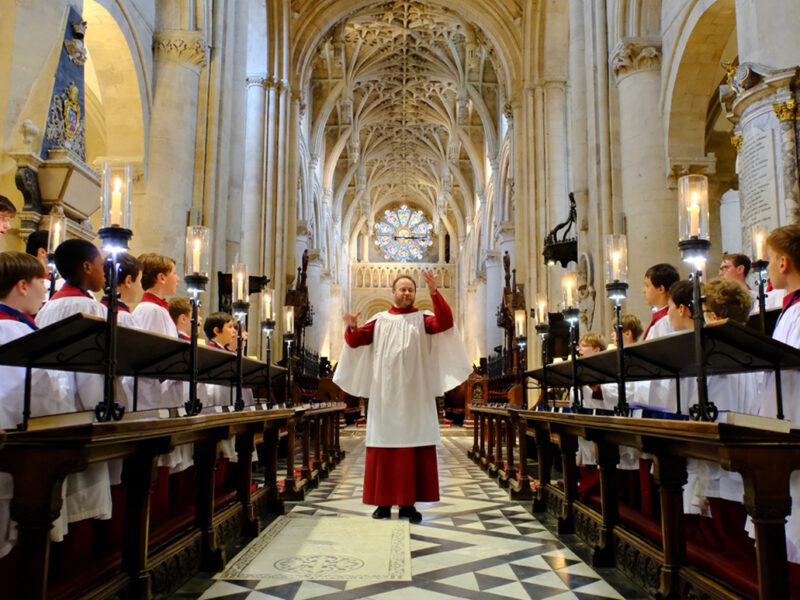
Tractarian missions began at home in the slums of England that had emerged seemingly overnight in the context of the Industrial Revolution. The first such mission in England was established by Walter Hook who became the vicar of Leeds in 1837. Hook was a strong advocate for social reform and campaigned politically on behalf of workers’ rights and education to deal with the extreme poverty endured by the inhabitants of Leeds who had largely been neglected. However, Hook, as a high churchman, also believed it to be necessary even in this poor community to have a beautiful church building that was fit for liturgical worship. St. Peter’s Church in Leeds was in need of significant repair when Hook arrived, and he insisted that elaborate alterations be made during the renovation project that would better facilitate the worship of God even in an impoverished community. Such changes included a more pronounced altar, a spacious area for receiving Holy Communion, and room for a choir to sing choral music as part of the worship service. To the utilitarian eye of the time, the beautification of the worship space would be seen as far from the highest priority, but Hook believed that it was necessary for the cathedral sanctuary to evoke a sense of awe in the worshipers.[27] This view was shared by Edward Pusey, who provided funding for the rebuilding of the Hooks Leeds Parish, which was completed in 1842. Men like Hook and Pusey “believed that dramatic and ritualistic services, centred around the eucharist, drew the labouring poor and the working classes to church, because they offered them an appealing contrast to the drabness of their everyday lives.”[28] Using beauty to bridge the emerging cultural gap between the rich in the Church of England and the poor working class living in the slums, Walter Hook’s ministry was incredibly effective. In just over two decades serving in Leeds, Hook managed to more than double the number of Anglican parishes in Leeds, and the number of those attending church regularly increased immensely.
The popularity of the aforementioned David Livingstone spanned beyond Livingstone’s own evangelical community into the Tractarian community as well. In 1857, Livingstone’s book, Missionary Travels and Researches in South Africa was published, outlining the details of his fifteen-year residence in Africa that had begun in 1841. In response to inspirational speeches delivered by Livingstone at both Oxford and Cambridge, both universities joined together in 1859 to form the “Oxford and Cambridge Mission to Central Africa”, later to be joined by the universities at Durham and Dublin and known as the University Mission to Central Africa (UMCA) going forward.[29] In line with Livingstone’s vision, the UMCA passed its first resolution stating its desire to establish “one or more Stations in Southern Central Africa, which may serve as centres of commerce and Christianity, for the promotion of the spread of true religion, agriculture, and lawful commerce, and the ultimate extirpation of the slave trade”, which both John Keble and Edward Pusey endorsed.[30] However, unlike the typical missionary endeavors in the first half of the 19th century, the UMCA was insistent that a missionary bishop should be consecrated to oversee the project abroad, which was consistent with Pusey’s stated position in 1838.[31] Converts to Christianity were not being brought into an agency or mission society, but into the one, holy, catholic, and apostolic church. For this reason, and in keeping with the practice of the early church, episcopal government was to be established to shepherd the flocks growing in foreign lands. Charles McKenzie was consecrated as the Church of England’s first missionary bishop in Cape Town, South Africa on New Year’s Day 1861 and then proceeded north to what is now Mozambique at the Kongone mouth of the Zambezi River, where he joined David Livingstone’s new mission in February.[32]
Much like the evangelical missions in the first half of the 19th century, the UMCA’s work was entangled with the goal of ending the slave trade in Africa, which, while noble, had the potential to create political distractions. The first congregation for the University Mission was made up of slaves who had been forcibly liberated by Livingstone from Portuguese traders. Violence erupted in the mission when the missionaries, led by Bishop McKenzie, who originally opposed the use of violence, joined the Manganja tribe in carrying out attacks on the slave trading Ajawas. Such violence was met with disappointment by the Tractarian sponsors of the mission back home, like Keble and Pusey, who had high hopes that the UMCA would take a more pacifist approach and keep itself independent from imperial concerns.
Nonetheless, the Zambezi mission could still be considered a success due to the staying power of the Tractarian principles that continued to characterize the mission, which included daily morning and evening prayer and weekly and feast-day communion.[33] Bishop McKenzie’s time leading the mission was short-lived as he passed away in January 1862 due to complications from malaria. McKenzie’s untimely death inspired the Zambezi mission to move forward. Concludes Fraut, “Along the Zambezi today, the ecclesiology and churchmanship planted by the UMCA continue to have a measured presence amongst the panoply of faiths, practices, and denominations that comprise African Christianity.”[34]
Another of the first Anglo-Catholic theorists of mission was Fr. Richard Benson, who founded the Society of St. John the Evangelist (SSJE), the first religious order of monks in the Anglican tradition, in 1866. The success of the Society’s early missions was due, argues Rowan Strong, to Benson’s ability to moderate the ritualistic practices of the high Anglo-Catholics, making his missional approach more acceptable to Protestants, as well as effectively separating the work of evangelism abroad from the political and cultural baggage associated with the British Empire.[35] Benson placed great emphasis on the sacrament of baptism and the renewal of baptismal vows in his theology of mission, for it was in baptism that one was united with the Holy Spirit, whose supernatural work was necessary to bring about growth in holiness in the Christian life. “Mission, therefore, was a participation in the procession of the Holy Spirit from the Father and the Son, whereby the Spirit made the baptised holy, in the likeness of Christ, and consequently attractive to non-Christians.”[36] This Anglo-Catholic emphasis on sacramentology provided common ground for living out the faith in a foreign culture without fear of sublimating the gospel message.
In 1869, just over a decade after the Sepoy Mutiny, the SSJE sent Samuel Wilberforce O’Neill on a mission to India. O’Neill’s approach to mission, under Benson’s influence and leadership, represented a clear departure from the Europeanizing norm that had characterized Anglican missions earlier in the 19th century and provoked the Sepoy Rebellion.[37] Rather than coming into India with the aim of building up infrastructure or promoting commerce, O’Neill emphasized the importance of the communal, ascetic life of prayer.[38] This lifestyle would be more in line with the norms of the native population they were trying to reach with the gospel. Furthermore, living the ascetic life in community would help to ensure that those Indians coming to the faith were doing so with pure motives rather than seeking benefits or wealth that British missionaries might offer. Such an approach bridged the cultural gap between British and Indian society and avoided the pitfall of imposing British culture or commerce onto Indian society. Consistent with Pusey’s 1938 sermon, Benson also questioned the worthiness of time spent translating the Bible into Marathi, the local language in India, and counseled O’Neill that time would be better spent in prayer and conversation with the people rather than devoted to printing copies of Scripture.[39] This was not because Benson did not believe in the power of Scripture, but rather because he recognized that time spent trying to master the local language to the degree necessary to produce a proper translation was time that could be spent building a community around prayer and the sacraments. Perhaps Benson had learned from the mistake made by the first English missionary to India, William Carey, who, in presuming to immediately translate the New Testament into Bengali, produced a work that was unintelligible and ineffective.[40]
In Jerusalem, the diocese that began with the patronage of the Earl of Shaftsbury and Lord Palmerston to promote the return of the Jews to the Holy Land was reconstituted in 1887 and placed under the authority of Bishop George F.P. Blyth, a committed Anglo-Catholic. Blyth took a completely different approach to the mission than his predecessors. Rather than seeing the local Eastern and Oriental Orthodox Christians in the region as targets for Protestant evangelism, Blyth recognized them as fellow Christians and sought to establish catholic unity in the region. Preaching the sermon for Blyth’s consecration was Edward Bickersteth, the Bishop of Exeter, who made clear that Blyth, unlike previous evangelical Anglican bishops, would not serve as Bishop of Jerusalem, an office that was recognized by the Anglo-Catholics as being held by the Greek Patriarch, Nicodemus I. Rather, Blyth would serve as the Bishop of the Church of England in Jerusalem in the East, and would function as a missionary bishop in the region.[41] This was an important shift in tone that changed the direction of the mission work among Anglicans who would, going forward, be focused on converting Jews and Muslim Arabs. Eleven years later, Bishop Blyth preached a sermon at the consecration of the Collegiate Church of St. George from Jesus’ high priestly prayer in St. John 17:21: “That they may all be one, as Thou, Father, art in Me and I in Thee, that they may also be one In Us; that the world may believe that Thou hast sent Me.”[42] In the sermon, Blyth reaffirmed his commitment to unity and catholicity by saying,
Here in Jerusalem is the natural center of the accomplishment of his will; here we must return with childlike purity, as to the cradle of the primitive Faith. And with such professed aim are the representative bishops of the communions of national Churches of Christendom gathered at the mother city of our religion.[43]
Blyth recognized that in affirming the unity of Anglicans with other branches of Christ’s church, mission could be directed outwardly towards Jews and Muslims rather than towards combatting each other, a position that he advocated at the 1888 and 1897 Lambeth Conferences.[44] In 1905, the Palestinian Native Church Council was formed to provide Arab Anglicans with a greater voice in church governance and to transition the diocese from missionary control to become a self-governing and self-supportive church.[45] Because of this emphasis on catholicity, writes Kenneth Clark, the Palestinian Native Church Council “could find itself compatible with the ancient churches, taking part with them in the Middle East Council of Churches and its more local tentative predecessor councils.”[46] While Blyth, like his predecessors, affirmed that Romans 11 taught that there would be a future revival among the Jews, and given the Christian witness in the Holy City in his day, he was hopeful that the time had come for Jews to convert to Christianity. However, Blyth’s desire to see the conversion of the Jews did not distract him from converting the Arabs to Christianity, among whom he had far more success. Blyth was able to avoid political pressures that would accompany a need for funds by establishing his own fund, the Jerusalem and the East Mission, which was able to sustain the diocese financially.[47] By recognizing the true boundaries of the church and refocusing evangelism efforts toward unbelievers rather than other branches of the church, the Diocese of Jerusalem began to experience significant growth among Arabs.
Conclusion
A more comprehensive examination of the British missionary movement in the 19th century would require some discussion of evangelical mission theorists such as Henry Venn and Rufus Anderson, among others, who were strong advocates of enculturated ministry and believed that indigenous churches should be self-governing, self-supporting, and self-propagating. However, in surveying some of the early missions inspired by the Oxford Movement, we receive some insight into ways in which Anglo-Catholics sought to apply their theological reforms domestically to the broader mission of evangelism worldwide. Because the Oxford Movement saw itself as a reform movement fighting for the independence of the church in England from the political agendas of Parliament, it could also more easily distance its missional aims from the imperial goals abroad, seeing its authority as rooted in the apostolic church rather than in the state. Such a separation allowed missionaries of a Tractarian or Anglo-Catholic persuasion to be more open to the concerns of enculturation of the faith in foreign lands than evangelicals, broadly speaking. Those things that were most important to the Oxford Movement, such as the celebration of the sacraments, communal liturgical prayer, architectural beauty, and the fellowship and mutual recognition of other branches of Christ’s Church, served to provide a common ground with other cultures and a basis for living out the Christian faith together. This sacramental piety largely transcended the cultural divide without risking the imposition of one culture upon that of another. The examples of the Tractarians, and the heirs of that movement in the latter half of the 19th century, set the stage for the work of Roland Allen at the beginning of the 20th century, and his valuable works on enculturation are insightful and necessary for consideration in the Anglican Communion today.
- Edward B. Pusey, “The Church the Converter of the Heathen,” Project Canterbury, accessed April 3, 2026, https://anglicanhistory.org/pusey/converter.html. ↑
- Stephen Neill, A History of Christian Missions (London: Penguin Books, 1986), 214. ↑
- Niall Ferguson, Empire: The Rise and Demise of the British World Order and the Lessons for Global Power (New York, Basic Books, 2004), 96. ↑
- Ibid, 98. ↑
- Bruce L. Mouser, “Origins of Church Missionary Society Accommodation to Imperial Policy: The Sierra Leone Quagmire and the Closing of the Susu Mission, 1804-17”, Journal of Religion in Africa 39 (2009) 375-402, 380. ↑
- Ibid, 375. ↑
- Ibid, 388. ↑
- Ibid, 393. ↑
- Andrew Porter, Religion Versus Empire? British Protestant Missionaries and Overseas Expansion, 1700-1914,
(Manchester: Manchester University Press, 2004), 139. ↑ - Ibid, 139-140. ↑
- Report from the Select Committee on Aborigines (British Settlements), Parliamentary Papers (1837) 7 (425), 74, quoted in Porter, 143. ↑
- Porter, 144. ↑
- Ferguson, 139. Niall Ferguson notes that the Opium Wars were portrayed in the Illustrated London News in 1841 as “a crusade to introduce the benefits of free trade to yet another benighted Oriental despotism.” Ferguson astutely observes, “It is indeed one of the richer ironies of the Victorian value-system that the same navy that was deployed to abolish the slave trade was also active in expanding the narcotics trade.” ↑
- Porter, 146. ↑
- Ferguson, 102. ↑
- Ibid, 103-104. ↑
- Ibid, 108. ↑
- Quoted in Neill, 267. ↑
- Neill, 237. ↑
- Palmer et. al., 673. ↑
- Palmer, 538 ↑
- Alison Dingle, “Nineteenth Century ‘Jewish Restorationism’ in the service of Anti-Catholicism: Lord Shaftesbury and the Christian Zionist Movement in Britain” Journal of Holy Land and Palestine Studies 24.1 (2025): 99–119, 100-101 ↑
- Living church https://livingchurch.org/history/from-the-archives-consecration-of-st-georges-jerusalem-1898/ ↑
- Kenneth Cragg, The Arab Christian: A History in the Middle East (Louisville, KY, 1991), 133. ↑
- Pusey, “The Church the Converter of the Heathen.” ↑
- Rowan Strong, “Origins of Anglo-Catholic Missions: Fr Richard Benson and the Initial Missions of the Society ofSt John the Evangelist, 1869-1882.” The Journal of Ecclesiastical History 66, no. 1 (2015): 90–115, 91. https://doi.org/10.1017/S0022046913000626. ↑
- Simeon Rowsell, “Dr Walter Hook,” Leeds Minster, October 31, 2025, https://leedsminster.org/about-the-minster/dr-walter-hook/. ↑
- Strong, 92. ↑
- Ibid, 306. ↑
- Ibid, 307 ↑
- Ibid, 308. ↑
- Ibid, 312. ↑
- Ibid, 318. ↑
- Ibid, 328. ↑
- Strong, 94-95. ↑
- Ibid, 98. ↑
- Ibid, 102. ↑
- Ibid, 100. ↑
- Ibid, 105. ↑
- Neill, 223. ↑
- Edward Bickerstith, “Thy Kingdom Come” On the Occasion of The Consecration of the Ven. G.F.P. Blyth, March 25, 1887, 14. Project Canterbury. https://anglicanhistory.org/me/bickersteth_blyth1887.html ↑
- George F. Popham Blyth, “Archives: Consecration of St. George’s, Jerusalem (1898),” The Living Church, May 24, 2024, https://livingchurch.org/history/from-the-archives-consecration-of-st-georges-jerusalem-1898/. ↑
- Ibid. ↑
- Ibid, Editors’ Note. ↑
- Diocese of Jerusalem: The Episcopal Church in Jerusalem and the Middle East. Accessed May 5th, 2026.
https://j-diocese.org/diocesan-history/ ↑ - Craig, 134. ↑
- Now known as the Jerusalem and Middle East Church Association (JMECA). ↑