Thomas Cranmer and the Shape of the Reformation
Thomas Cranmer was executed at Oxford in 1556. Archbishop of Canterbury. Principal architect of the English Reformation and the Book of Common Prayer. He stood at the center of a genuine rupture, and he knew it. Under harsh imprisonment he signed recantations. Then he withdrew them publicly at the end. He did not die out of confusion. He died because he was firmly convinced of Scripture’s authority, the nature of the sacraments, and the rightful order of Christ’s Church.
Rome judged those convictions to be in serious error. Cranmer’s life is remembered in a Church that carries both continuity and real breaks in its history. That memory complicates any simple story of uninterrupted development.
This essay asks a direct question. Can Newman’s theory of development account honestly for what happened at the Reformation? And what does it mean that Rome now receives Anglican patrimony through the Ordinariate while still declaring Anglican orders completely invalid? Those two questions are connected. Tracing that connection is the work of what follows.
Newman’s Development Thesis
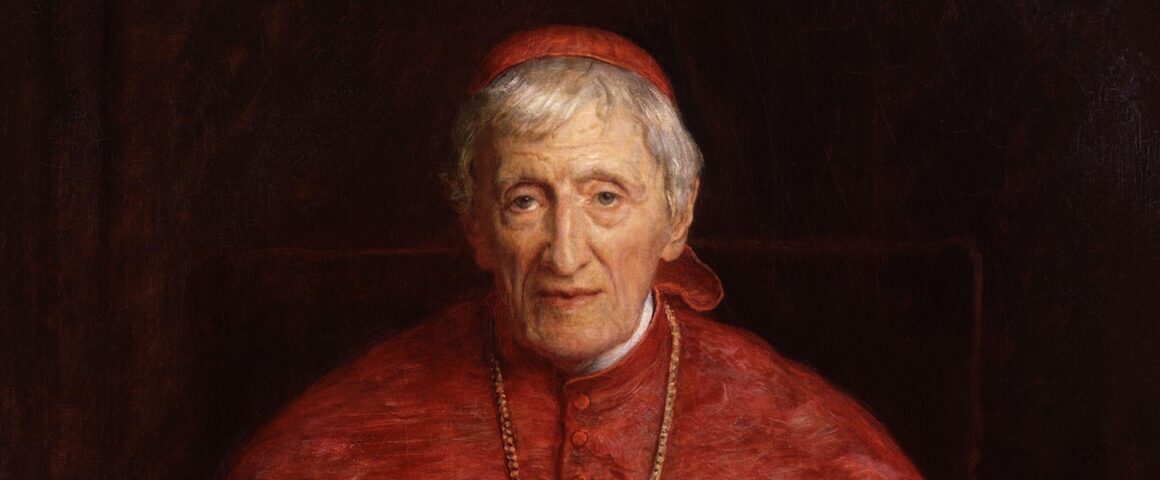
Newman’s theory is the natural place to begin, because it is the most serious attempt anyone has made to explain how a Church can change without breaking faith with itself. John Henry Newman offered the most sophisticated modern account of how doctrine develops over time. In An Essay on the Development of Christian Doctrine, Newman proposed that teaching unfolds organically. What is implicit in the Church’s life becomes explicit over time. Not rupture. Maturation. Newman’s theory has genuine power. It accounts for how the Church clarified teachings such as the Trinity and Christology amid early controversies while remaining the same Church.
Yet pressed into service as a comprehensive explanation of all historical disagreement, Newman’s framework risks reading the past backward to serve the present. Genuine conflicts get recast as stages in a single unfolding trajectory. What appeared irreconcilable at the time becomes, in hindsight, preparatory. Change is not contradiction but growth. Earlier teaching is the incomplete expression of truth, not error.
Mozley’s Objection
Newman’s theory sounds persuasive in the abstract. But one of his own contemporaries saw the trouble in how it actually gets applied. J. B. Mozley was an Oxford Movement insider and critic of Newman, connected to him by extremely close family ties. His brothers Thomas and John both married Newman’s sisters Harriett and Jemima in 1836. Mozley did not reject development outright. His objection was more precise.
Newman’s tests for distinguishing genuine development from corruption are applied retrospectively, from the vantage point of the later development itself. The later form supplies the standard by which the earlier form is judged preparatory. That means almost any historical conflict can be incorporated after the fact into a continuous narrative. The endpoint determines what counts as movement toward it. Read backward, every rupture looks like preparation.
Mozley pressed a harder question. Does Newman’s theory honor the integrity of earlier positions on their own terms? Or does it subtly reassign their meaning to serve a later coherence?
Cranmer was not a half-formed Catholic moving toward Trent. He was making a distinct claim about where authority resides, how Scripture governs the Church, and what the sacraments do. That claim was coherent on its own terms. Development thinking reads that coherence as provisional, a stage the tradition was passing through, rather than as a substantive theological judgment deserving engagement on its own merits.
There is also a deeper problem. The development thesis cannot settle the question of who narrates the development. If Rome narrates it, Anglican formularies represent deficient expressions of truths the Church would later clarify. If the Anglican tradition narrates its own continuity with the Fathers, the picture looks entirely different. Newman’s framework does not resolve this dispute. It restates it at a higher level of abstraction. That is not a small limitation when the question concerns which Church faithfully guards the apostolic deposit.
This concern is urgent for Anglicans. The English Reformation was no gentle evolution. It was a rescue mission. Contested authority. Sacramental disagreement. State coercion. Competing visions of the Church. Anglican identity was forged through this discontinuity, anchored in the supreme authority of Scripture as articulated in the Thirty-nine Articles and the Book of Common Prayer. Any theory of development must reckon with this rupture as substantive reality. Not an interpretive inconvenience.
The Ordinariate and the Problem of a Selective Harvest
Mozley’s objection is not just an old academic dispute. It describes exactly what is happening right now in the Ordinariate. The Personal Ordinariates make the tension concrete. Through Anglicanorum Coetibus (2009), Rome receives Anglican liturgical and spiritual patrimony, much of it Cranmer’s legacy, into full communion. Cranmer’s legacy. Welcomed.
Yet Apostolicae Curae (1896) remains in force, declaring Anglican orders absolutely null and utterly void, invalid in principle due to defect of form and intention. This judgment goes beyond technical details of ordination. It rests on the belief that the Reformation fundamentally altered the understanding of priesthood and the sacrificial character of the Eucharist, and therefore calls key elements of Anglican theology on ministry and sacraments into question.
Invalid in principle. Received in practice. One judgment assesses the tradition’s sacramental structure as defective; the other reaps its ecclesial fruits. Newman’s development thesis is invoked to hold these divergent judgments together: continuity of life can persist even where earlier forms were judged deficient, as long as they participate in a larger clarifying trajectory.
Mozley’s objection applies directly. The Ordinariate arrangement is what he would have most likely called a selective harvest. Rome receives the liturgical and devotional output of a tradition whose orders it declared invalid and theology substandard. The argument runs that genuine spiritual fruit can grow from structurally deficient soil, and that the Ordinariate now provides the sacramental grounding those fruits always required.
But notice what this requires. The Anglican tradition is not received as a coherent theological witness. It is received as a spiritual movement whose best elements are being completed. Cranmer’s liturgy is welcomed. Cranmer’s theology of orders is not. The Articles are bracketed. The Prayer Book is adapted. The tradition is pulled apart and sorted, its pieces evaluated individually rather than received whole.
Mozley’s question stands. Does this honor the shape of what Anglicanism actually claimed? Or does it ease the historical conflict to serve a later institutional arrangement? Development illuminates organic clarification well. It strains when required to account for sixteenth-century trauma and power realities while selectively harvesting the results.
Two Incompatible Stories
So the Ordinariate is not a side issue. It forces a choice between two ways of telling the Anglican story. For Anglicans discerning the Ordinariate, the issue transcends personal vocation or institutional alignment. It concerns how Anglican identity is interpreted. Completed. Corrected. Reclassified. Answering that question requires adopting a theory of continuity. And that theory must itself be tested against Scripture, the Articles, and the Prayer Book.
Classical Anglicans have always understood the Reformation as a recovery of apostolic faith, not a rupture with it. The rupture was Rome’s. The Articles, the Homilies, and the Prayer Book do not present themselves as provisional stages awaiting completion. They present themselves as the Church of England’s faithful return to Scripture and the ancient Church. That self-understanding is not a negotiating position. It is a theological claim. Development theory, applied from Rome’s vantage point, cannot affirm that claim. It can only reclassify it.
These are two incompatible stories. One says Anglicanism was a deficient movement that found its completion in Rome. The other says the English Reformation recovered what Rome had obscured. Newman’s framework cannot hold them both. It can only choose one and read the other as a stage.
Cranmer’s flame and the Reformation rupture he helped shape resist easy incorporation into any developmental scheme. For us, fidelity means standing honestly in that memory: testing all things by Holy Scripture and the Church’s historic witness, refusing to let a tidy theory displace theological truth. The formularies do not invite us to stand at the beginning of someone else’s story. They invite us to stand within our own.
The Structural Dangers of Development Theory
That choice between two stories is not just a historical puzzle. It has a present-day consequence worth naming honestly. There is also a failure of diagnosis in how Anglicanism’s struggles are read. Messiness is mistaken for weakness. But consider what visible conflict actually signals. When ACNA disciplines bishops publicly, when an archbishop sits in a cooling period under transparent accountability, the formularies are doing exactly what they were designed to do. They are creating real boundaries that people actually fight over. That is not institutional failure. That is institutional life.
Rome, by contrast, often manages its internal tensions quietly rather than addressing them in public. Cardinal Kasper’s proposals on divorce and remarriage. The continued public platform given to Fr. James Martin alongside the removal of Bishop Strickland from his diocese. The ongoing ambiguity as German bishops press for blessings of same-sex unions. These examples are frequently cited in broader discussions of how Rome handles internal disagreement, and reasonable observers read them differently. But taken together, they at least suggest that an institution can look unified from the outside while real disagreement persists beneath the surface. A communion that fights in public over its boundaries may, in that respect, be healthier than one that maintains the appearance of unity while leaving its tensions unresolved.
But there is a deeper warning here. Anglicans fleeing to Rome right now believe they are escaping liberalism. They look at the chaos in ACNA and the Church of England. The doctrinal incoherence. The capitulation to the spirit of the age. They see Rome as a safe harbor. Doctrinal certainty. Apostolic stability. A place where truth does not bend to fashion.
They are mistaken. And Newman is why.
Newman handed Rome a tool that cuts both ways. Once you accept that doctrine develops, that later insight can reinterpret earlier claims, that continuity persists through substantive change, you have opened a door that cannot be closed. There is no theological brake. There is no stopping point.
Rome used development theory to absorb Newman’s own conversion and to justify everything from papal infallibility onward. But the logic does not belong to Rome in any exclusive sense. It belongs to whoever is doing the interpreting at a given moment. That is the structural danger. A theory with no intrinsic stopping point cannot guarantee which direction it will be used. It can secure a conclusion today and just as easily unsettle that same conclusion tomorrow, because the tool that got you here is still sitting on the table for the next interpreter to pick up.
This is not a prediction about what Rome will decide on any particular question. It is an observation about what kind of theory development is. Progressive Anglicans have justified the abandonment of classical doctrine by appeal to the Spirit leading the Church into new understanding. Progressive Catholic theologians have made structurally identical appeals to the development of doctrine. The vocabulary differs. The underlying logic, an evolving present claiming the authority to reinterpret a fixed past, does not. Whether or not Rome’s magisterium holds firm on any given teaching, the theory itself supplies no principled reason internal to it why it could not be used that way.
Consider carefully what that means. The Anglican drawn to Rome out of frustration with ACNA’s instability is not necessarily moving to firmer ground. Rome’s institutional discipline may well hold, and has held, on many fronts. But the interpretive framework now embedded in Roman theology through Newman is the same framework that doctrinal minimalists elsewhere have used to argue their way out of inconvenient teaching. That is worth sitting with honestly, whatever one concludes about Rome’s actual trajectory.
Meanwhile, Anglicanism is messy. Fractured. Politically turbulent. And it still possesses what Rome no longer does: formularies that do not bend. The Articles do not develop. The Prayer Book does not evolve. Scripture does not accommodate. These are boundaries. Not provisional stages. Not waiting for completion. They are the Church’s faithful statement of what the Church actually is.
The formularies do not invite reinterpretation in light of the modern world. They invite fidelity within a fixed frame. That is why they have proven far more resistant to liberalism’s assault than Rome has. Rome gave away the hedge when it accepted development as the measure of fidelity. Anglicanism kept it.
For those weighing the Ordinariate as an escape from instability: the formularies, not the development theory underwriting Rome’s reception of Anglican converts, are what actually hold a line over time. Newman’s framework was brilliant. But a framework with no internal stopping point is a precarious foundation to build doctrinal confidence on, wherever it is used.
In Closing
None of this is said with any pleasure. To be completely candid, I am not writing this out of hostility toward my Roman Catholic brothers and sisters, nor out of any desire to disparage the Ordinariate. Quite the contrary. I write out of genuine concern. My fear is that many people are being encouraged to leave Anglicanism because it is portrayed as uniquely afflicted with doctrinal uncertainty, division, and instability, while Rome is presented as offering a secure and definitive solution to those problems.
I simply do not believe that claim withstands scrutiny. In my judgment, Rome faces many of the same difficulties, and in some respects faces even greater long-term challenges. The doctrine of development, whatever its strengths, creates significant questions regarding continuity and doctrinal stability. As a result, I am not persuaded that the Ordinariate ultimately delivers all that is often promised by its advocates.
I am also concerned by a certain triumphalism that sometimes accompanies these discussions, particularly in online circles. Too often, crossing the Tiber is presented not merely as a change of ecclesiastical affiliation but as an escape from the ordinary struggles of the Church. Yet church history provides little basis for such confidence. There has never been a golden age of the Church free from controversy, doctrinal dispute, institutional failure, or human weakness. The tensions we see today are not new. They are as old as the apostolic era itself. Even within the pages of Acts and the Pauline epistles, we find disagreements among the apostles and challenges that required patience, humility, and discernment.
For that reason, I believe Christians should be cautious about claims that any particular communion has finally resolved the fundamental difficulties that have accompanied the Church throughout her earthly pilgrimage. If I truly believed Rome had solved these problems, I would feel obligated to acknowledge it. The fact that I do not is not the result of prejudice or animosity, but of a sincere conviction that the difficulties are not escaped by crossing the Tiber. They are simply encountered in a different form.
Those who have made that journey deserve charity and respect, as do those who remain Anglican. My concern is not with the sincerity of converts, but with the expectation that institutional realignment can provide a final answer to questions that have challenged Christians since the first century. In the end, the Church’s confidence rests not in the perfection of her members or the absence of controversy, but in the faithfulness of Christ, who remains Lord of His Church even amid her struggles.
Notes
- John Henry Newman, An Essay on the Development of Christian Doctrine (London: Longmans, Green, and Co., 1845), 27–30.
- Leo XIII, Apostolicae Curae (Rome, 1896), https:// www.vatican.va.
- Congregation for the Doctrine of the Faith, Anglicanorum Coetibus(Rome, 2009), https://www.vatican.va.
- J. B. Mozley, The Theory of Development: A Criticism of Dr. Newman’s Essay on the Development of Christian Doctrine (London: Rivingtons, 1878), 2–6.