Discipline for C4SO, When?
The Holy Sacrament of the precious Body and Blood of our Lord is no joke. In the Blessed Sacrament, Jesus Christ himself feeds us with his saving body and blood. Bishop John Jewel writes,
Herein we teach the people not that a naked sign or token, but that Christ’s body and blood indeed and verily be given unto us; that we verily eat it; that we verily drink it; that we verily be relieved and live by it; that we are bones of his bones, and flesh of his flesh; that Christ dwelleth in us, and we in him…thus spiritually, and with the mouth of our faith, we eat the body of Christ and drink his blood, even as verily as his body was verily broken and his blood shed upon the cross.[1]
If Jesus Christ gives himself in the Holy Eucharist—if we indeed eat his body and drink his blood through the mystical power of the Holy Spirit working by faith—then these holy mysteries must be handled with supreme reverence. They are more precious than the Holy of Holies. They are more wonderful than the pillar of glory that descended upon the Tabernacle. They should make us tremble in fear, awe, and gratefulness at the Sovereign King who gifts himself in splendor through his humble creatures of bread and wine hallowed by consecration.
The 1662 Book of Common Prayer gives this salutary warning to all who would come to the Table:
DEARLY beloved in the Lord, ye that mind to come to the holy Communion of the Body and Blood of our Saviour Christ, must consider how St. Paul exhorteth all persons diligently to try and examine themselves, before they presume to eat of that Bread, and drink of that Cup. For as the benefit is great, if with a true penitent heart and lively faith we receive that holy Sacrament; (for then we spiritually eat the flesh of Christ, and spiritually drink his blood; then we dwell in Christ, and Christ in us; we are one with Christ, and Christ with us;) so is the danger great, if we receive the same unworthily: For then we are guilty of the Body and Blood of Christ our Saviour; we eat and drink our own damnation, not considering the Lord’s Body; we kindle God’s wrath against us; we provoke him to plague us with divers diseases, and sundry kinds of death. Judge therefore yourselves, brethren, that ye be not judged of the Lord; repent you truly for your sins past; have a lively and steadfast faith in Christ our Saviour; amend your lives, and be in perfect charity with all men; so shall ye be meet partakers of those holy mysteries. And above all things ye must give most humble and hearty thanks to God, the Father, the Son, and the Holy Ghost, for the redemption of the world by the death and passion of our Saviour Christ, both God and man; who did humble himself, even to the death upon the Cross, for us miserable sinners, who lay in darkness and the shadow of death; that he might make us the children of God, and exalt us to everlasting life. And to the end that we should always remember the exceeding great love of our Master, and only Saviour Jesus Christ, thus dying for us, and the innumerable benefits which by his precious blood-shedding he hath obtained to us; he hath instituted and ordained holy Mysteries, as pledges of his love, and for a continual remembrance of his death, to our great and endless comfort. To him, therefore, with the Father and the Holy Ghost, let us give, as we are most bounden, continual thanks; submitting ourselves wholly to his holy will and pleasure, and studying to serve him in true holiness and righteousness all the days of our life. Amen (emphasis added).
Of course, modernists will complain about “perfect charity” and use the phrasing to dismiss the warning; they neglect the fact that this is indeed our aim and telos. In other words, a firm purpose of amendment of life is the will’s submission to obeying the whole will of God—a purpose to do all that he commands, and to so amend our lives that we habitually and increasingly become the sorts of virtuous people who instinctively attain after the perfection of Christ’s own love. Coming to the Table with any less of a purpose renders us unworthy. Of course, we won’t be perfect, but the Eucharist is a medicine for those who intend to aim after perfection—to keep the commands of Christ.
So will the Lord of glory think kindly of C4SO when they tell those in unrepentant same-sex relationships that they can come to his Table? Will God spare their leadership for welcoming people to eat and drink damnation on themselves?
In Trinity Church of Atlanta’s whitepapers, we read the following:
“Are “Side A” Christians invited to attend and/or become members at Trinity?
Yes. Our intention is to create a culture of hospitality in keeping with the Spirit of Jesus who not only welcomed but sought out the company of those who longed for community and belonging without qualification or condition. Therefore, the communion table, which is the apex of our Sunday worship at Trinity, is open to all who call on the name of Jesus for salvation. Membership, according to our understanding, is inclusion and participation in the common life of the church. Therefore, in order to become a member at Trinity we require only the following:
-
- Profession of Orthodox Christian Faith (Agreement with the Historic Creeds)
- Christian Baptism
- Regular Church Attendance
Side A “Christians” are, of course, affirming Christians. They are those who reject the historic teaching of Scripture found in Romans 1, 1 Corinthians 6, Leviticus 18 (which they cavil against—“do you eat shellfish?”—while the text describes things God judged even pagan nations for), and Matthew 19 (in which our Lord’s argument is based on the notion that sexuality should reflect its Edenic design).
This is tolerated in C4SO. It is in direct violation of both Holy Scripture and our Catechism, which enjoins repentance from sin as a prerequisite to the reception of the Blessed Sacrament (Questions 122, 135, and 136).
In the name of inclusive charity, they have imbibed the hypocrisy so endemic to a certain brand of evangelicalism. It is far more disingenuous to say “yes, we think you’re living in sin, but come take the Lord’s Supper.” This is an evident horror; there is no semblance of real and authentic love here for those who struggle with same-sex attraction. Rather, C4SO would tolerate its churches inviting people to do what objectively invites damnation in the name of being open. What a faux-charity!
The severity of the matter merits a severe response. This is pastoral negligence in the highest order: allowing the disgrace of the Body and Blood and the denigration of these holy mysteries. Yes, we can and should shepherd LGBTQ+ persons into holiness. Yes, there is such a thing as an unjust bigotry that excludes even those who are living in celibacy and repentance from a lively participation in the Church’s life. No, this does not remotely justify the disgrace of allowing those with no intention of amendment of life or repentance to come to the Table. This practice is blasphemous.
This cannot be tolerated in the ACNA. We should expect nothing but God’s judgment upon us if we do not reverse course.
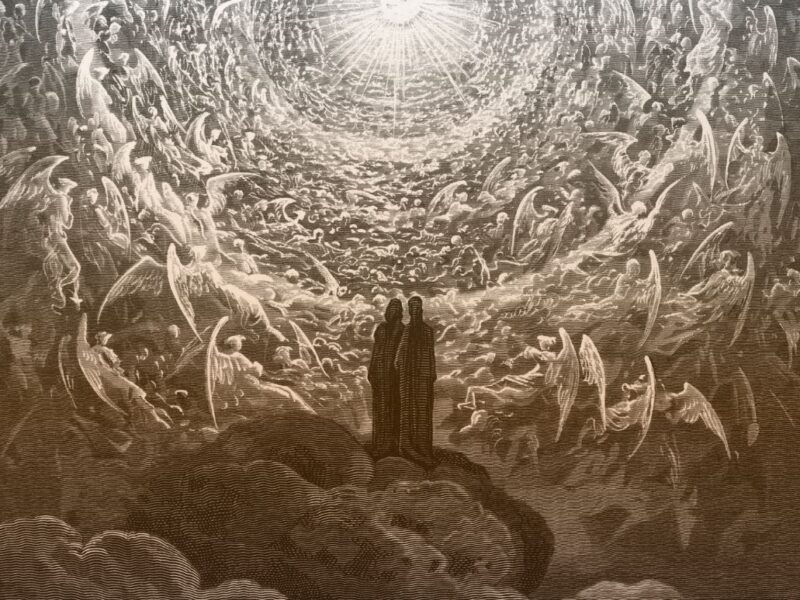
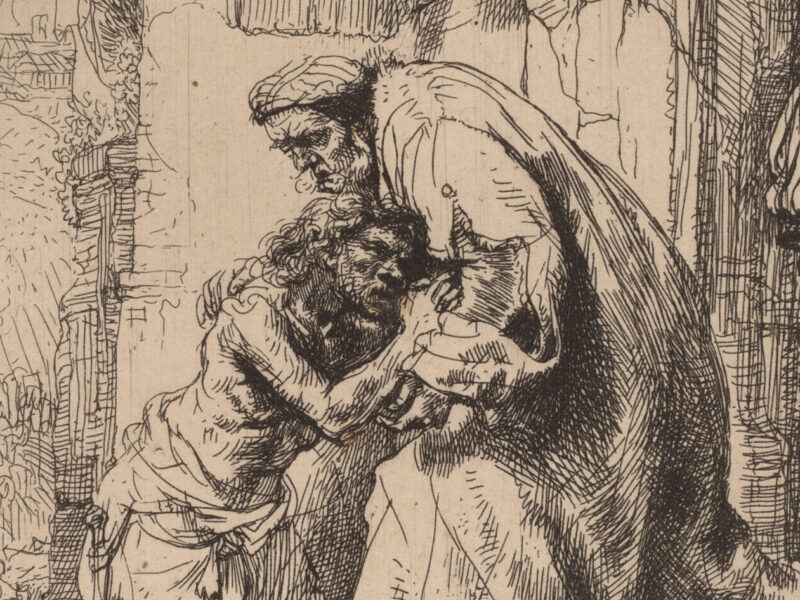
Image source: Wikimedia Commons.
Notes
- John Jewel, The Works of John Jewel, Bishop of Salisbury, ed. John Ayre, vol. 1 (Cambridge: The Parker Society, 1845) 448. ↑