God, who at sundry times and in divers manners spake in time past unto the fathers by the prophets, Hath in these last days spoken unto us by his Son, whom he hath appointed heir of all things, by whom also he made the worlds. Hebrews 1:1 KJV
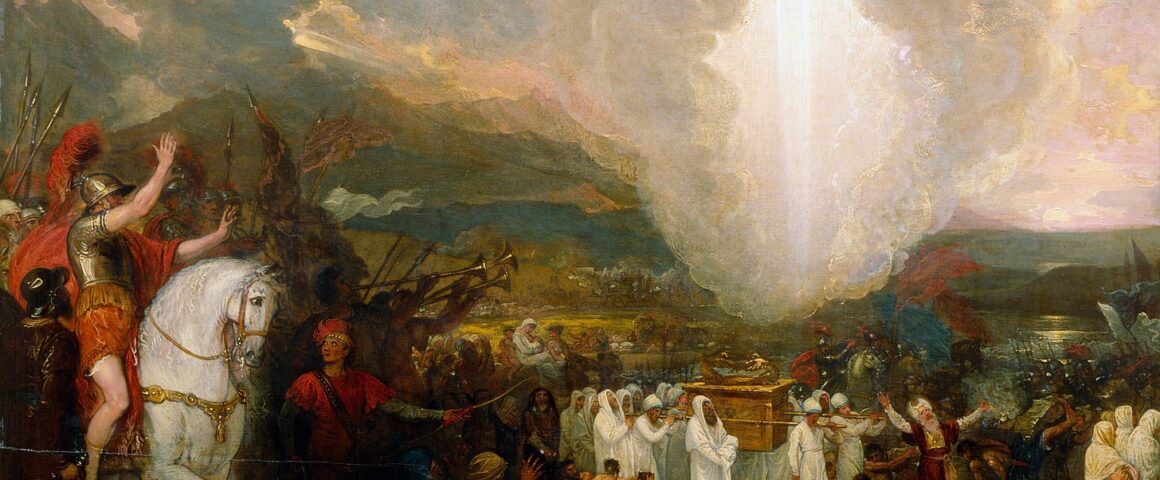
One of the great, if not the greatest mystery of the Old Testament is what happens to the Ark of the Covenant? Extensive instructions are given to Moses regarding the construction of the Ark. It is central to the worship of the Holy God for the people of Israel throughout the Old Testament. The Ark is used and misused by the kings of Israel as a token or charm for favor in battle, yet it powerfully reveals the presence of God when possession of the Ark destroys the idol of the false god Dagon and renders the Philistines ill (1 Samuel 5:4). David attempts to bring the Ark into Jerusalem, only for Uzzah to be struck dead when he touches the Ark with his hands to steady it from falling (2 Samuel 6:7). Eventually, David is allowed to bring the Ark into Jerusalem as the Ark blesses Obed-edom’s household (Gittites by the way), where it is temporarily housed after Uzzah’s death (2 Samuel 6:10-12).
Then, the Ark vanishes.
It is present with the Israelites from their long trek in the wilderness, into the Promised Land, and then into the age of judges, kings, and prophets. Then poof, it disappears. Where does it go?
The conventional thought is that it was lost, destroyed, and taken into captivity. After all, Ezra 5:14 describes that after Jerusalem falls to Babylon, “the vessels also of gold and silver of the house of God, which Nebuchadnezzar took out of the temple that was in Jerusalem,” are taken away (See also 2 Kings 25:13-15). The Ark was overlaid and covered in gold. What greater insult could Babylon bestow upon Israel than to take the most holy object Israel possessed? The apocryphal book 2 Esdras 10:22 laments, “the ark of our covenant is spoiled, our holy things are defiled,” amidst a litany of grievances as to Israel’s captivity.
Though Israel is restored from exile after seventy years and the temple is rebuilt, two things are strangely missing: the return of the Ark and the presence of God, the “glory of the Lord” which “departed from the threshold” of the temple in Ezekiel 10:18. The closest we get to the Ark’s fate is in the apocryphal account of 2 Maccabees 2:4, where we learn that Jeremiah allegedly absconds with the tent of meeting and the Ark, hiding it in an unmarked cave near Mount Nebo, where Moses viewed the Promised Land afar, before his death (Deuteronomy 34:6). Neither the Ark nor the Glory of God returns to the rebuilt temple nor makes an appearance in the Old Testament.
Until Christ’s advent.
The Ark of the Covenant was a sacred sign of God’s presence with His people. The Ark symbolically sat in the Holy of Holies within the tent of meeting and later the temple, with the high priest only entering its presence once a year to make offering on behalf of all of Israel. As the Lord reveals in Isaiah 66:1, “The heaven is my throne, and the earth is my footstool.” The Ark is the place of God’s footstool, of meeting us, mere mortals, through the ministry of the high priest (Isaiah 66:1). The loss of the Ark and the failure of God’s Shekhinah, His holy presence, to return means the Israelites enter into a parched era without the Word of the Lord. The people are restored to their Promised Land after exile, yet the Promised Presence of God and His Kingdom are empty. The cisterns sit empty for the wells have dried up.
Until Christ is born.
Suddenly, He has appeared. As a thief in the night, He makes His presence known. Prior to exile, Ezekiel witnessed the angelic hosts escort God’s Shekhinah away from the temple, yet on Christmas Eve, an innumerable angelic chorus proclaims in the heavens to shepherd’s ears that the Ark has returned. God’s Shekhinah has come as Isaiah prophesied, Immanuel – God with us. “And, lo, the angel of the Lord came upon them, and the glory of the Lord shone round about them: and they were sore afraid” (Luke 2:9). The Ark of God, is “unto you is born this day in the city of David a Saviour, which is Christ the Lord” (Luke 2:11). THe Ark is not overlaid in gold, but instead “the babe wrapped in swaddling clothes, lying in a manger” (Luke 2:12).
The parallels continue, as Christ, the young boy, enters the temple, and when St. Mary and St. Joseph find Him, He is found teaching the teachers! The elders marvel at the young country boy’s learning and wisdom as He sits “in the midst of the doctors, both hearing them, and asking them questions” (Luke 2:46). Like the Ark of old, Christ is surrounded by Israel’s elders. Just as the Ark bears a copy of the Law (Deuteronomy 31:25), now the Lawgiver speaks and teaches His people, “And all that heard him were astonished at his understanding and answers” (Deuteronomy 2:47). The Living Ark of God’s Presence has returned. Where else should He be found than in the temple, or as He told the Holy Family, “How is it that ye sought me? wist ye not that I must be about my Father’s business?” (Luke 2:49).
The fulfillment of Jesus as the true Ark, the final Ark, the Ark of the New Covenant, continues in His earthly ministry. When Christ begins His public ministry, He heads not towards Jerusalem, but away to the border. He goes to St. John the Baptist and is baptized to “fulfill all things.” The location of John’s baptism is key. John is baptizing across the Jordan River (John 10:40), just beyond the Promised Land. Christ enters into those waters and the heavens are parted and the Holy Ghost descends with the Father proclaiming “This is my beloved Son, in whom I am well pleased” (Matthew 3:17). While the waters parted in the Jordan when the Ark crossed with Joshua to conquer the Promised Land (Joshua 3:17), now the heavens part when Jesus plunges into the Jordan’s waters.
Therefore, Jesus the Ark of God, goes immediately to war against the tyrant, Satan, and the demons. He takes the war to their turf, the wilderness, to withstand and overcome Satan’s temptations (Matthew 4). Joshua, whose name is the same as Jesus, bore the Ark in his conquering of the Promised Land by driving out the demonic tribes that had polluted the land. Jesus, the true Joshua, as the living Ark and living Temple of God, goes throughout the land cleansing it from illness, sickness, sin, oppression, and possession of the evil one. Sin, death, and the devil shall be defeated by the Second Joshua, and redeemed humanity shall inherit the Promised Land.
Jesus the Ark is on a military campaign of conquest. He visits Jerusalem for “sorties” and quickly hits within the temple, but His earthly ministry focuses on overcoming the evil one’s wrongful possession of Israel. While Jesus retakes the territory lost to Satan, He also makes raids in Gentile lands, hinting at the coming conquest of the earth that the meek shall inherit.
Finally, the time is right, and Jesus the Ark of God, Jesus the Son of God enfleshed, Jesus the Temple of the Living God not made of hands, enters into the second temple made with hands. “[T]he Lord, whom ye seek, shall suddenly come to his temple” (Malachi 3:1). “Blessed be the Lord God of Israel; for he hath visited and redeemed his people” (Luke 1:68). His hour nears for His final blow against sin, death, and the devil. His great defeat shall be Satan’s great undoing. The trap is set.
Jesus told His disciples that He is the true temple (John 2:21). He predicted the walls of the second temple would not remain standing (Matthew 24:2), yet the temple of His body and Ark of His presence would rise in three days. (John 2:19). In His death, He becomes the Great High Priest who both offers the sacrifice and is the sacrifice. He is God with us, and He tabernacles with us in our own flesh. He is veiled as the Ark of God, not in gold but overlaid in flesh of our flesh, bone of our bone. He enters into the heavenly Holy of Holies and sprinkles His own cleansing blood so we may follow after Him and commune with the Father. As the Living Temple of God, He bears within Himself the Ark of God, for He is the fulfillment of all the Old Covenant. In fact, He bears within Himself the same items as the old Ark.
The old Ark bore “Aaron’s rod that budded,” and Christ is the Great High Priest replacing the Aaronic priesthood (Hebrews 9:4). Christ is the forever priest in the line of Melchizedek (Hebrews 7:17). Jesus is the priest who buds life on the wood of the Cross. Today and forever, Christ offers Himself through Himself in the heavenly temple, which is the true temple (Hebrews 9:11-28).
The old Ark bore “the tables of the covenant,” which Christ has fulfilled in His life, His death, and His resurrection over Satan’s power when we were gone astray (Hebrews 9:4). He is the Living Word who fulfills and accomplishes the written words on the tablets. The curtain in the earthly temple is rent asunder because the Living Ark of God has torn His body so that we may be one with the Father (Matthew 27:50-51). “By a new and living way, which he hath consecrated for us, through the veil, that is to say, his flesh” (Hebrews 10:20).
The old Ark bore “the golden pot that had manna,” the bread of heaven (Hebrews 9:4; Ps. 78:24-25). Who is Jesus? “I am that bread of life,” “I am the living bread which came down from heaven: if any man eat of this bread, he shall live for ever: and the bread that I will give is my flesh, which I will give for the life of the world” (John 6:48, 51). Is it any wonder that when we celebrate holy communion, so many parishes preserve this image of Jesus as the true Ark of God by placing the chalice veil in a manner to evoke the image of the Ark of the covenant?
The Ark of God has ascended. The Great High Priest offers Himself eternally and once for all on our behalf. Now, in this age of the Church, our Lord tabernacles within us, and makes us “the temple of God, and that the Spirit of God dwelleth in you” (1 Corinthians 3:16-17). In our union with Christ the Ark of God, the Law He bore for us is fulfilled, we are guided by His budded rod and staff that comfort us, and He feeds us with His heavenly food in every Lord’s Supper. Now let us bear Christ in the ark of our hearts and the temples of our bodies by how we live, breathe, and serve Him in the power of the Holy Ghost.
Finally, let us trim our wicks and keep the watch, for our Lord’s return. The Lord suddenly appeared in His Incarnation as the returned Ark of God. Are we on the watch for His coming again? May our eyes not slumber this Advent, but look for the return of God’s Ark, the King of kings, and Lord of lords. For “unto them that look for him shall he appear the second time without sin unto salvation” (Hebrews 9:28).
Amen, come now Lord Jesus!