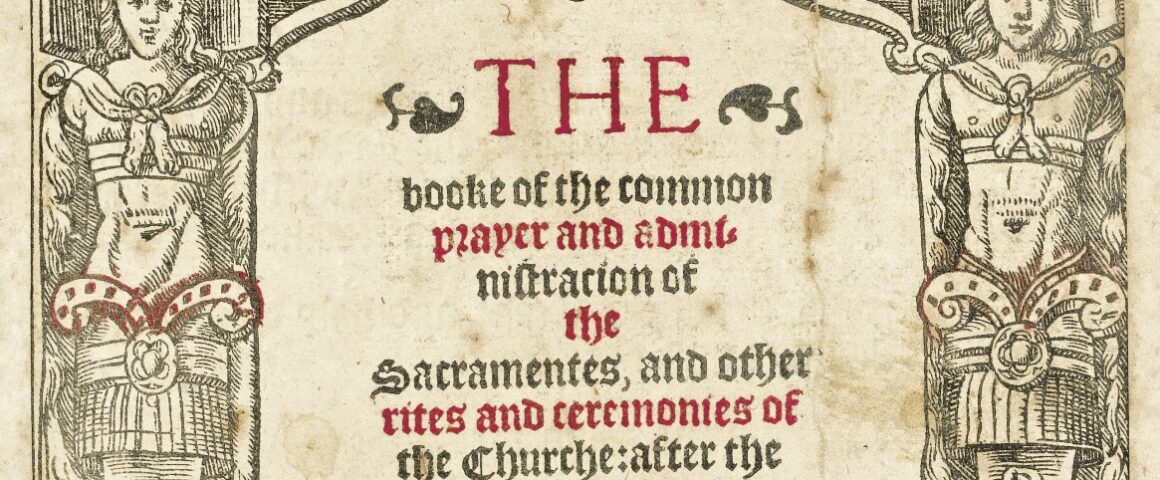
Officium Ad Fontes: The Daily Office with Original Sources. By Gregory Graybill. Translated by Gregory Graybill. Colorado Springs, Col.: Anglican House Publishers, 2026. 273 pp. $24.95 (paper).
Saepius Officio might be the last publicly recognized Anglican contribution in Latin. Such is a massive shift from the days of the 1662 Ordinal that required bishops to test any diaconal candidate to “find him learned in the Latin tongue and sufficiently instructed in holy Scripture.” Few remember that Latin editions of our formularies are authoritative versions, and that our reformers exported their reformed catholic liturgies via Latin and Greek editions. Indeed, many candidates these days lack any familiarity with ancient languages beyond the headings in the Psalter and Hymns of the Prayer Book, rendering the homilies of Anglican clergy like Lancelot Andrews, Mark Frank, Charles Wesley, and John Keble at times incomprehensible. However, a growing interest in ressourcement among Anglicans has included a revival of our once robust study in the ancient ecclesiastical languages that fueled the Reformation. Rev. Dr. Graybill’s Officium has sought to answer that interest with a devotional tool tailored to the Anglican Church in North America’s 2019 Book of Common Prayer.
Graybill’s rendition of the 2019 Daily Office provides four hours of prayer–Morning, Midday, Evening, and Compline–with supplemental canticles. Each hour and supplement comes with two formats: an interlinear that overlays Greek, Hebrew, and/or Latin with English and an ad fontes option that contains the ancient languages by themselves. This lineup allows for a reader to easily find the appropriate hour without too much flipping through the offices. The English scriptural language within each office comes from the ESV, except for psalms, canticles, and certain citations that use prayer book language; the Greek follows the LXX and Nestle-Aland’s 28th revised edition of the Novum Testamentum Graece; the Hebrew derives from the Biblia Hebraica Stuttgartensia; and the Latin relies on public domain ancient western liturgies and the Vulgate. Graybill selected quality sources for each language, which offer clergy, seminarians, scholars, and students useful portions to engage in devotional study.
However, the Officium has inexplicable quirks. Graybill only translated portions of each Office: the confession and absolution, the general thanksgiving, St. John Chrysostom’s prayer, the Collects of the Day, rubrics, and additional directions remain only in English even in the Ad Fontes sections. The ancient language portions alternate between Latin, Greek, and Hebrew without an apparent rhyme or reason, such as only one opening sentence in Greek while the other options are in Hebrew. Of the three ancient languages, Latin edges out Greek and Hebrew in terms of quantity, as Graybill includes Latin alongside either Hebrew or Greek in certain portions while leaving out the third language (such as, each canticle comes in Latin and either Greek or Hebrew). Only a fluent reader of all four languages would recite any ad fontes office in full, unless they possess such sufficient skill as to translate English into their specialty language as they pray. The offices muddle together the Latin, Greek, and Hebrew in the Ad Fontes, rendering the three streams a jarring experience even for the fluent.
The Officium’s limitations prove rueful given that prior Greek, Hebrew, and Latin editions of the Divine Office are in the public domain, especially given its misleading description as full liturgies in original-language versions. The confession, absolution, and St. John Chrysostom’s prayer all exist in accessible Latin editions–and the blessed St. John penned his original prayer in Greek. Meanwhile, the Whithorn Press Anglican Office Book offers some Latin prayers for private devotion, and Shaun Evans’ private passion project furthered AOB’s offerings with an online version that includes the ancient seven canonical hours of prayer and Bible in Latin. The online AOB even allows users to select parallel or Latin only options to say or sing each office.
Had Graybill only supplied the 2019 Daily Office in Latin and English he would have struck a homerun in an empty publishing market. The fence is low for ad fontes publications of our beloved Prayer Book. Still, Graybill has succeeded in providing a printed ancient language divine office from an official Anglican publisher of an authorized prayer book. I pray that Anglican House Publishers builds upon his seminal renewal of ecclesiastical language versions of the Book of Common Prayer, providing the Daily Office in full rather than in part. Rather than a language tool for intermediate readers, full office editions in Latin, Greek, and Hebrew would mature Graybill’s vision into something the reformers and renewers would appreciate for devotion and study. Indeed, such a resource would enable classical educators and seminaries to form their students in the classical Anglican Way. Graybill’s Officium is a fair stopgap for such aims. Graybill opened the tap. May others re-dig the fonts.