Forward in Faith North American Annual Assembly 2025
I am writing to you, fathers,
because you know him who is from the beginning.
I am writing to you, young men,
because you have overcome the evil one.
I write to you, children,
because you know the Father.
I write to you, fathers,
because you know him who is from the beginning.
I write to you, young men,
because you are strong,
and the word of God abides in you,
and you have overcome the evil one.(1 John 2:13)
Every blessed Sunday and holy day we gather to celebrate Holy Communion we profess the words of the Nicene Creed. This beautiful, poetic summary of our faith is professed, confessed, subscribed, and acknowledged as our faith. But do we teach it? Are we passing it down?
For although we may faithfully believe, we must work to conceive and nourish the implanted Word of God in our own children, grandchildren, godchildren, nephews, nieces, and cousins of all ages.
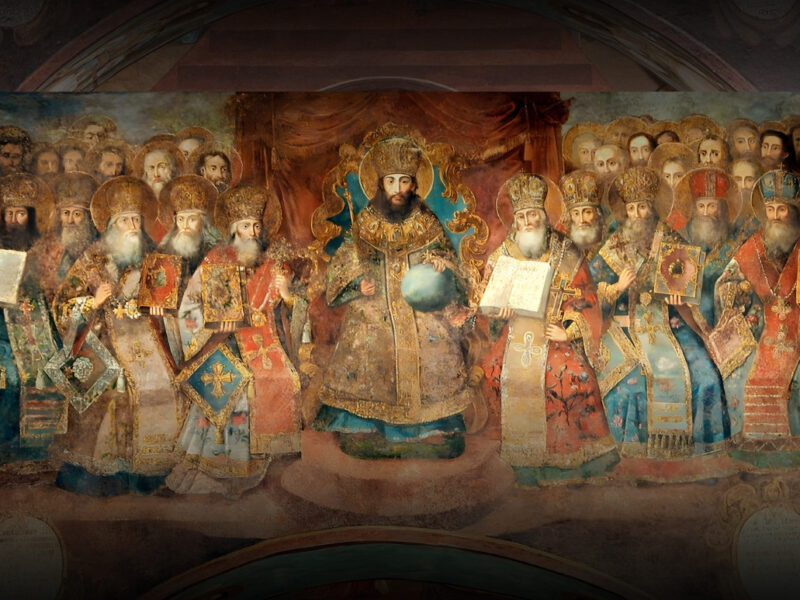
The fathers of the Council of Nicaea assembled seventeen hundred years ago, bruised, battered, maimed, and sufferers for the faith once delivered. Remember this, those fathers not only suffered in the last great persecution of the Roman empire, but they suffered willingly for something that did not belong to them, nor belong to us. They suffered in their faith and trust in the Gospel of Jesus Christ that had been delivered to them by their own parents and godparents.
Will we at least suffer a little inconvenience as fathers, mothers, uncles, aunts, and grandparents pass on what was delivered to us?
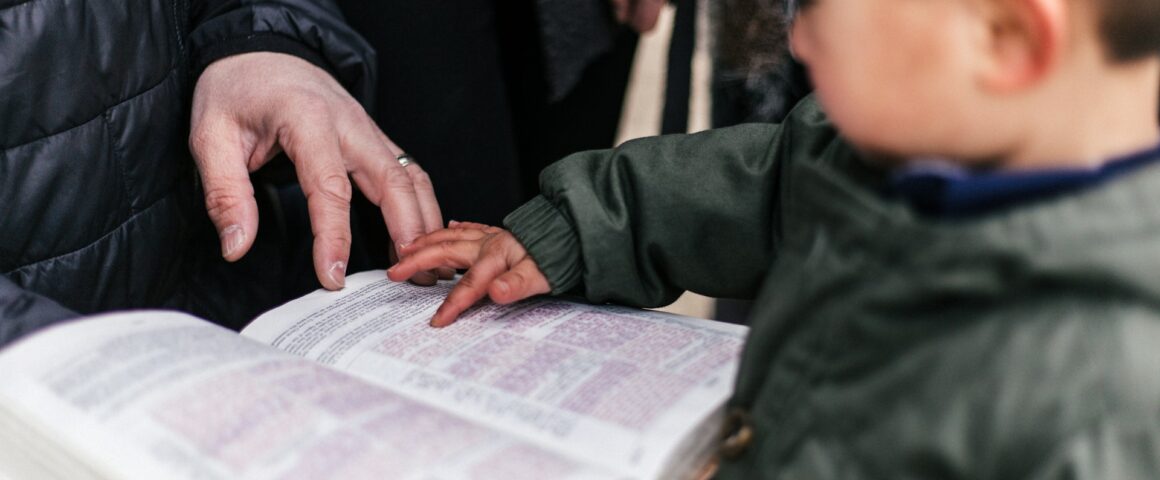
My Lord Bishops, fellow priests, lifelong deacons, and loyal laity – my brothers and sisters in Christ – will we not keep awake and keep the watch for at least one hour? Can we truly not bear to forego an hour of television, internet, phone usage, meetings, homework, and kids sports to sit down and pray with our children, pray over our children, read Scripture to them, delivering to them the faith once delivered, and answer their questions?
I do not wish to shame you, but to encourage you, in the spirit of the fathers of Nicaea, who suffered much but bore it all to write a confession that has been passed down to this day. Therefore, do not let this confessed faith die on the lips of our tongues and not be lived out by the works of our Christian living, starting with forming the faith within our own families. In the words of the classic prayer book’s epistle lesson for Rogation Sunday, “be ye doers of the word, and not hearers only, deceiving your own selves.” (James 1:22, KJV).
Clergy, we are called to shepherd, and you cannot shepherd without searching for wandering sheep and exercising your staff to draw them away from heretical error and the mouths of wolves. Likewise clergy, you must lead and leading does not happen from the rear. Recall the Ordinal’s lesson for those in the diaconate and at the consecration of bishops, both which are drawn from 1 Timothy 3. Think back to your ordination and when each of you heard 1 Timothy 3:12, “Let deacons each be the husband of one wife, managing their children and their own households well.” There are some in this room who will become bishops one day, and several who are bishops. Heed 1 Timothy 3:4-5: “He must manage his own household well, with all dignity keeping his children submissive for if someone does not know how to manage his own household, how will he care for God’s church?” Priests, less you forget that you too once were a deacon and always are a servant of Christ, hear what St. Titus saith in his first chapter, verse 6, “if anyone is above reproach, the husband of one wife, and his children are believers and not open to the charge of debauchery or insubordination” then they are qualified to serve as presbyters.
How we manage our household matters. If we are not tending to the flock at home, the flock in the pew notices. Lead within your own home and teach the faith daily not only as an example but by words of prayer, acts of mercy, and reading of Scripture. We cannot expect to feed the flock once a week and be surprised when they are starving mid-week. This goes for our parishes as well as our own families. The 1662 prayer book provides the minimum standard, “The Curate of every Parish shall diligently upon Sundays and Holy days, after the second Lesson at Evening Prayer, openly in the Church instruct and examine so many Children of his Parish sent unto him, as he shall think convenient, in some Part of this Catechism.”[2]
Yet the burden is not to be placed solely upon the clergy, for laity you are charged by the ancient prayer book rubric at the end of the 1662 prayer book catechism, that “all Fathers, Mothers, Masters, and Dames, shall cause their Children, Servants, and Apprentices (which have not learned their Catechism,) to come to the Church at the time appointed, and obediently to hear, and be ordered by the Curate, until such time as they have learned all that is here appointed for them to learn.”[3] Begin faithfully passing down the faith through faithfully taking your children to Church, but do not rely on your outsourcing their religious upbringing for one hour of Sunday School, a playful youth group fellowship, nor the divine service. You are with your children daily, therefore take up your cross daily and be a living example and teach your little ones by ensuring they know the faith, starting with “the Creed, the Lord’s Prayer, and the Ten Commandments; and also can answer to the other questions of this short Catechism.” (1662 Catechism). Notably, and rightfully so, the ACNA standard for confirmation is for confirmands to “learn the Creeds,” meaning the three Catholic creeds professed in the Articles of Religion and Fundamental Declarations: the Apostles’, the Nicene, and the Athanasian. We need the wisdom of each catholic creed amidst this world of madness and confusion we find ourselves in.
Parents, when you baptize your children, you do well, it is a godly start. Yet do not leave them without the strengthening of the Holy Ghost through the imposition of hands and confirmation of faith by the bishop. They are reborn in Christ but babes in Christ. Do not leave them floundering as babes needing spiritual milk for the rest of their lives. Wean them into spiritual maturity so they may go and make disciples through their own children, your grandchildren, and all those whom they disciple in Christ. May your legacy be that of grandchildren and great-grandchildren both by blood and in Spirit as your own children share the Gospel of Jesus Christ.
Why the emphasis on passing down faith? Because it is not a personal experience nor feeling of the heart but is the concrete truth revealed to the Church by the inspiration of the Holy Spirit. God has acted in history, and this fact must be passed on. It is in the passing on of the truth of the Good News of Jesus’ victory over sin, death, and the devil that breaks our hearts open to receive and be transformed body and soul in Christ. Therefore, keep preaching and keep celebrating Holy Communion every Sunday, every Holy Day, and Lord-willing every day dear Church. But also, each day of the week pass down the faith through praying with your children – both those of your flesh and your godchildren and the children within the parish.
Teach by singing. Sing the hymns of old with joy and gladness, thereby instilling lyrics into the hearts and souls of young and old alike. It is a travesty that there is no hymnal in our province, at least nothing until Assembly 2029. My oldest child will nearly have graduated, therefore we have been singing and teaching her and her younger siblings from the 1940 Hymnal, Hymns Ancient and Modern, and the REC’s Book of Common Praise. Hymnals are worth gifting to your families within the parish as a confirmation gift,[4] not to mention as a baptismal gift to equip fathers and mothers to use them at home. Teach the flock how to sing from the hymnal and they will have theology to meditate, hum, and sing throughout the week to their children at home. Parents, teach your children the common hymns you learned in your own youth by singing a hymn daily throughout the week. It’s not about singing well, it’s about singing words into the hearts of young saints and using technology, one can easily pull up a choir singing any hymn beautifully and majestically, not to mention in tune.[5] Yet, if you are like me and tone deaf, allow me to pass on the words of my grandmother, “If you can’t sing good, sing loud and make a joyful noise unto the Lord.”
Faith formation in the Anglican way should always begin in the prayer book. I commend the daily office lectionary of our standard, the 1662 Book of Common Prayer.[6] Simply using this daily Bible reading plan, will result in “The New Testament … be read over orderly every year thrice,” excepting Revelation and “the most part thereof [of the Old Testament] will be read every year once.” (Preface, 1662 Book of Common Prayer). Ministers, if we desire the ancient faith to return and to grow, then take up the ancient way and heed the 1662 Preface, which required “all priests and deacons are to say daily the Morning and Evening Prayer either privately or openly.”
Therefore, start small and fail small. Families, simply start with the daily office lectionary readings from the prayer book. Add the Psalter and then the shorter Family offices provided in the 2019, 1928, or REC prayer books.[7] During the hectic days of running kids from one event to the next mid-week, sing hymns in the car through Spotify, pray and teach the Lord’s Prayer, share something you read from the Holy Scriptures. Above all else, do not let a “missed day” depress your efforts, instead, circumvent Satan by making every ordinary moment a moment of prayer, teaching, and faith-passing.
Clergy, start small by doing at least one office – morning or evening prayer and then pick up the other over time. Move from private devotions to public services. You may start and be alone, but pick it up and remember if only two others join you, remember the prayer of St. John Chrysostom concluding each office, “ALMIGHTY God, who hast given us grace at this time with one accord to make our common supplications unto thee; and dost promise, that when two or three are gathered together in thy Name thou wilt grant their request.” Record your daily offices for your parishioners to listen and pray with you while they commute with their kids to school and ball practice. Post it for free on free YouTube channels and free podcasting apps, such as Spotify’s Podcast app. Your simple effort at disseminating the daily offices helps catechize the parent traveling with their child to soccer practice. Furthermore, use your weekly parish newsletter and send out catechesis materials for your families. God shall act upon such simple faithfulness, not only to build up the church and train up her youngest members, but also to call lost sheep back to the Good Shepherd. I guarantee God will use whatever creative means you use to draw a sinner into the Church and the open arms of our Savior. Have faith, little ones.
Regardless if you are lay or clergy, work towards creating, expanding, and building a thorough catechesis program within the local parish to assist the children of the parish who have a working single mom, or two-income household. They are struggling and need the help of the wider church to live up to the promises we made at their child’s baptism to “take heed that this Child, so soon as sufficiently instructed, be brought to the bishop to be confirmed by him.”[8] Let us raise up and train lay catechists who teach through a small gathering during the week.[9] Utilize technology, like the To Be A Christian app and several podcasts that teach directly from the catechism. Plug into your parish home school co-ops and parish schools a catechesis class.[10] Create a children’s choir, even if it is seasonal. These are simply ideas on how to live the Nicene faith by passing down the Nicene faith. Above all else, be creative in your catechesis and entrepreneurial in sharing your discoveries with the wider parish, diocese, and province so others will be blessed in raising up saints in a world that is hell bound and determined to show them the broad road that leads to destruction.
For example, when I was a parish priest, during Lent we would take up the two Offices of Instruction and do each one over the course of two Sundays. We need a new Offices of Instruction for the province, and I encourage you to contact the Liturgy Task Force like myself, and request one to be included in the Book of Occasional Offices. Another effort we instituted while rector, is orally reading several questions from the To Be A Christian catechism and jointly responding as a parish with the provided answer. Over the course of less than a year we would go through the entire catechism and did so three times around in less than three years. It engages people to remember the catechism and Lord-willing to use it. Yet we must gift young families with multiple physical copies of the catechism. I encourage, nay, I implore our province to make this catechism available at-cost in an affordable paperback (and Kindle e-book edition) to distribute more freely than the expensive hardcover, leather, and paid app versions we now have. Passing down the faith should not be prevented by a paywall.[11]
I return to what I said a moment ago, start small, fail small. I know the realities we face. The average American Christian is a gnostic and rarely realizes it. There are false teachings and unfaithfulness within and without the Church. But such was the case with the Nicene fathers. They gathered together not merely maimed in body, but also in spirit as they fought Arianism on one end, Donatists on another, paganism here, and imperial preferences to be ambiguous as to the hypostatic union. The Nicene fathers did not give in, and neither should we. We cannot merely be preservers of the faith, for the Gospel is not a museum piece, but is news to be shared; therefore, we must press on, press forward, and passing it on: first within our own household of faith, and out into the world in need of Good News.
We know this in our soul, we feel this in our bones. Scripture records and commands in Exodus 12:26-27, that when our children ask us why are we celebrating the Passover, then we shall tell them how the Lord God delivered us from Egypt. How much more shall we tell of our Lord Jesus’ final Passover that delivered us from sin, death, the devil, and delivered us the Kingdom? The Scriptures cry out to us in Deuteronomy 11:19 and Joshua 4:6-7 to teach our children, therefore simply take up the Scriptures and read. I know many of you feel ill-equipped or inadequate, I assure you are more than conquerors in Christ Jesus who has sent His Spirit to abide within you and to answer the questions asked by the least of these. However, even while you have your doubts or know that you do not know as much as you should about the faith, use this as a time to learn while you simultaneously are teaching. More importantly, ask for help from your fellow Christian and minister within your parish. Reach out to your bishop and the diocese for resources. Let us flood this province, our parish, this nation, and our homes with a godly zeal to pray, read, teach, and sing the Gospel daily.
Blessed Lord, who hast caused all holy Scriptures to be written for our learning: Grant that we may in such wise hear them, read, mark, learn, and inwardly digest them, that by patience and comfort of thy holy Word, we may embrace and ever hold fast the blessed hope of everlasting life, which thou hast given us in our Saviour Jesus Christ. Amen.[12]
Image Credit: Unsplash.
Notes
[1] Author of “A Faith for Generations: A Family Prayer Guide in the Anglican Tradition.”
[2] “The Minister of every Parish shall diligently, upon Sundays and Holy Days, or on some other convenient occasions, openly in the Church, instruct or examine the Youth of his Parish” (Offices of Instruction, 1928 Book of Common Prayer). See also, Canon LIX, 1604 Canons of the Church of England:
Ministers to Catechise every Sunday.
Every Parson, Vicar or Curate, upon every Sunday and Holy-day before Evening Prayer, shall for half an hour or more, examine and instruct the Youth, and ignorant Persons of his Parish, in the Ten Commandments, the Articles of the Belief, and in the Lord’s Prayer: and shall diligently hear, instruct, and teach them the Catechism set forth in the Book of Common Prayer. And all Fathers, Mothers, Masters and Mistresses, shall cause their Children, Servants and Apprentices, which have not learned the Catechism, to come to the Church at the time appointed, obediently to hear, and to be ordered by the Minister, until they have learned the same. And if any Minister neglect his Duty herein, let him be sharply reproved upon the first Complaint, and true Notice thereof given to the Bishop or Ordinary of the Place. If after submitting himself, he shall wilfully offend therein again, let him be suspended. If so the third time, there being little hope that he will be therein reformed, then Excommunicated, and so remain until he will be reformed. And likewise, if any of the said Fathers, Mothers, Masters or Mistresses, Children, Servants, or Apprentices shall neglect their Duties, as the one sort in not causing them to come, and the other in refusing to learn as aforesaid; let them be suspended by their Ordinaries (if they be not Children) and if they so persist by the space of a Month, then let them be Excommunicated.
available at: https://www.anglican.net/doctrines/1604-canon-law/
[3] The 1928 prayer book updates this rubric in the small Catechism to add the duty to all “Guardians and Sponsors, shall bring these, for whose religious nurture they are responsible,” thereby doubling down on the important and crucial role of godparents. (emphasis added).
[4] My hometown UMC church gifted me a hymnal in fifth grade at my confirmation. It was formative in my learning the great and classic hymns of the church. Yet, do not merely gift the hymnal, teach the parents and children how to use it and sing it.
[5] YouTube channels and Spotify playlists abound with classic hymnals organized with great choirs or singers. A small mission parish need not suffer, nor the isolated parent. Use new technology to teach the ancient faith.
[6] The 1662 daily office lectionary is the easiest to use and one merely goes chapter by chapter, versus newer prayer books have shorter readings but are harder to keep track where one leaves off one day and pick up the next. However, the St. Bernard Breviary remedies this difficulty for 2019 Book of Common Prayer users. Regardless which one you us, take up Scripture and use resources like https://liturgical-calendar.com or https://www.episcopalnet.org/Kalendars/index.html.
[7] I especially commend the two shortened versions of the daily office in the Family Prayer sections of the 1928 and REC prayer books, which I modernized and republished in my work, A Faith for Generations: A Family Prayer Guide in the Anglican Tradition, Second Edition (https://a.co/d/238yrX9).
[8] Baptismal Office, 1928 Book of Comon Prayer.
[9] The Anglican Diocese of All Nations (https://www.catechisttrainingschool.org/), Diocese of San Joaquin (https://anglicancatechist.org/), and other diocesan and parish efforts exist to raise up catechists. We need more such efforts across the province. See also, https://www.catechesisrenewal.com/anglican (list of resources including podcasts) and Catechists on Call, https://northamanglican.com/catechists-on-call-to-be-a-christian-app-now-available/.
[10] The 1604 Canons required “All School-Masters shall teach in English or Latin, as the Children are able to bear, the larger or shorter Catechism heretofore by publick Authority set forth.” (Canon LXXIX). This larger Catechism is a reference to Nowell’s longer and middle catechisms, both which are available online and the Middle Catechism I republished. (https://a.co/d/f0Kiqp5). I commend it as a supplemental resource to our provincial catechism and the classic prayer book short catechism, which has been separately republished with To Be A Christian references by Nashotah House. (https://a.co/d/g3aK2GS).
[11] College of Bishops, tear down this [pay]wall. I pray a Matthew 25 Initiative grant or gracious benefactor of the province will step in to make this app free for families, especially considering it is a pricey $4.99 when other catechisms are free or at most, 99 cents.
[12] Collect for the Second Sunday in Advent, 1662 Book of Common Prayer.