Should Anglicans Join the Celebration?
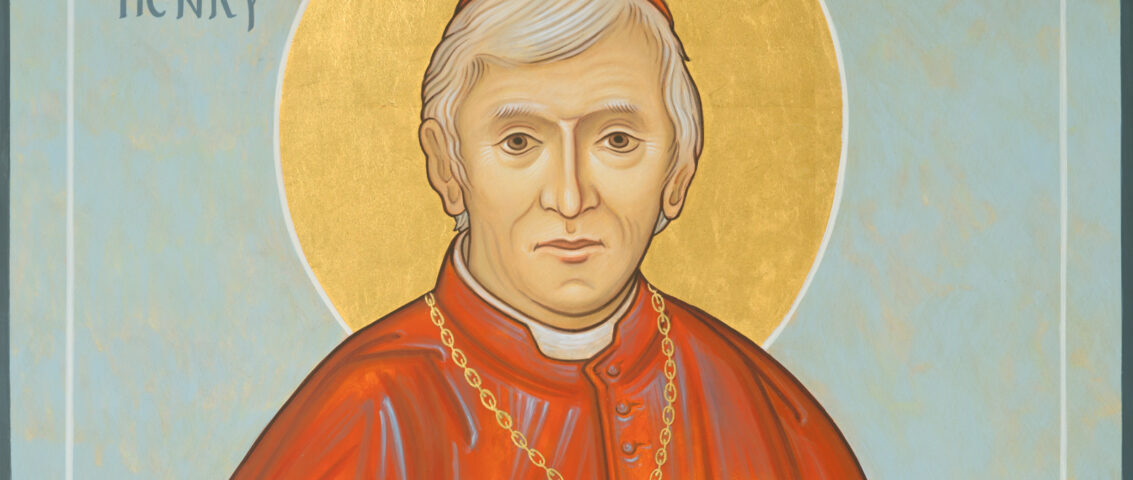
On July 31, 2025, the Roman Catholic Church declared John Henry Newman a Doctor of the Church. For Catholics, the honor is fitting. Newman, a towering nineteenth-century theologian, shaped modern Catholic thought, strengthened its understanding of authority, and provided a robust intellectual foundation. For Anglicans, the question is more complex. Newman was once one of us, a leader in the Oxford Movement who sought to reclaim the Church of England’s Catholic roots. Yet he left, convinced that true Catholicity lay only in Rome. Should Anglicans celebrate his Roman honor? I am skeptical. To do so risks blurring our distinct identity and story.
The English Reformation: A Rescue Mission, Not a Rebellion
The English Reformation was not a revolt against Catholicism but a restoration of it. Bishop George Bull wrote, “The Church of England was not erected anew, but only reformed, purged from the corruptions with which it had been defiled for many ages” (Vindication of the Church of England, Preface). The Reformers were not innovators. They removed distortions such as indulgences, papal overreach, and the late-medieval view of the Mass as a repeated sacrifice in order to preserve the faith once delivered. Bull adds, “We hold fast the foundation, Jesus Christ, and build thereon, not wood, hay, stubble; but the pure doctrine of Christ and His apostles, as it was received by the primitive Church” (Vindication, I.3).
Newman arrived at a different conclusion. He believed that full Catholicity required the authority of Rome. His departure and Rome’s celebration of him reflect that conviction. For Anglicans to join in risks suggesting we share his conclusion, which muddies our Reformed Catholic identity.
A century after Newman’s conversion, Archbishop Geoffrey Fisher offered a clarifying word: “The Anglican Communion has no doctrine of its own. We only possess the Catholic doctrine of the Catholic Church, enshrined in the Catholic Creeds; and those Creeds we hold without addition or diminution” (Address to the Church of England Council on Foreign Relations, 1951). Fisher’s point connects Bull’s Reformation confidence with our present dilemma. Anglicanism guards the historic faith without adding or subtracting. Newman’s Roman honors are notable. Still, they underscore his conviction that Anglicanism lacked Catholic fullness. Celebrating his title might imply we agree, which we do not.
Newman and Our Uneasy Memory
Anglicans remember Newman modestly in our liturgical calendars, and that is appropriate. His Tract 90 sought to align Anglican theology with Roman interpretations, but he ultimately abandoned that effort and joined Rome. His legacy now belongs to the Catholic Church. To celebrate his Doctor title as a validation of Anglicanism would be misleading. It ignores the path he chose and the faith we uphold.
Rather than focusing on Newman’s departure, we can turn to those who remained steadfast in the Anglican vision. Heroes such as Jewel, Hooker, Andrewes, Laud, and Bull defended a faith both Catholic and Reformed through persecution and controversy. Bull wrote, “In all things necessary to salvation, we teach no other doctrine than what the consent of the ancient Fathers and Councils have delivered to us” (Vindication, II.6). These figures stayed and preserved the faith in England. We do not need Rome’s heroes to feel complete. The faith we have inherited is sufficient.
The English Reformation was a deliverance, not a tragedy. It preserved the Catholic faith in England, “reformed, not made new,” as Bull reminds us. Fisher’s words echo this: we hold the Catholic Creeds without alteration. Our heroes Jewel, Hooker, Andrewes, Laud, and Bull lived this truth and endured to pass it down. Newman chose a different path, and his honor belongs to Rome. Anglicans need not join the celebration. Our task is to guard the Reformed Catholic faith entrusted to us, living it faithfully without seeking Rome’s approval. Newman belongs to Rome, and our calling is to remain steadfast in the fullness of the Gospel we already possess.
For Further Reading
Bull, George. A Vindication of the Church of England from the Errors and Corruptions of the Church of Rome. London, 1724.
Fisher, Geoffrey. Address to the Church of England Council on Foreign Relations. London: Church of England Council on Foreign Relations, 1951.
Newman, John Henry. Tract 90. Oxford: J. H. Parker, 1841.
Morris, Jeremy. “St. John Henry Newman: A Saint for Anglicans?” Journal of Theological Studies, 2022.