- Festivals and Fasts: Saint Bartholomew (August 24)
- Festivals and Fasts: Ember Days in September
- Festivals and Fasts: Saint Matthew (September 21)
- Festivals and Fasts: Saint Michael and All Angels (September 29)
This year, since Michaelmas falls on a Monday and Sundays are not fast days, its vigil is on the Saturday before. May the reflections of Robert Nelson on this day, from his Companion for the Festivals and Fasts of the Church of England, bless you on this vigil and on the feast day on Monday.
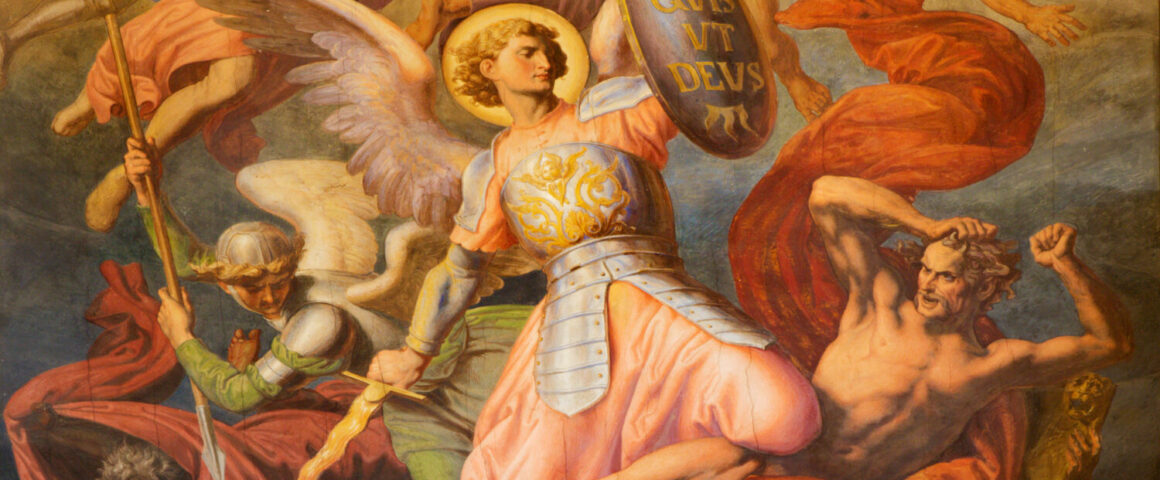
Saint Michael and All Angels—September 29.
Q. What Festival doth the Church this Day celebrate?
A. That of St. Michael and all Angels.
Q. What Account have we from Scripture of St. Michael?
A. That he was an Archangel, who presided over the Jewish Nation (styled one of the chief Princes) as other Archangels did over the Gentile World, as is evident of the Kingdom of Persia and the Kingdom of Greece, from Daniel (Dan. 10:13); that he had an Army of Angels under his Command and Conduct, that he fought with the Dragon, or Satan, and his Angels (Rev. 12:7), and that contending with the Devil, he disputed about the body of Moses (Jude 9).
Q. What doth the Fight mentioned in the Revelation of St. Michael and his Angels against the Dragon and his Angels most probably signify?
A. Some great Authors refer it to the Contest that happened at Rome between St Peter and Simon Magus; when that Apostle, by the efficacy of his Prayers, entirely prevailed against the seducing Arts of that Magician (Grot. Ham.). Others understand by it those violent Persecutions the Primitive Church laboured under, more or less, for Three Hundred Years, and which happily ceased when the Powers of the World became Christian (Mede.). It is generally agreed, that it denotes some eminent Victory of the Christian Church, by the Assistance of those ministering Spirits, over the Power and Malice of the Devil and his Instruments, who set themselves with all their might to prosecute and destroy it.
Q. To what former Dispute doth this Fight of the good and bad Angels seem to allude?
A. To the Expulsion of Lucifer, and the rebellious Angels from the Presence of God. It being very credible that God should make Use of some of his heavenly Host to drive those from his blessed Mansions, who had made themselves the just Objects of his Wrath. And upon this Account it may be thought that the Prince of those Angels, that fought against Satan, obtained the Name of Michael, which in the Hebrew signifies who is as God; in that he suppressed the Arrogancy of Lucifer, who went about to make himself in some Sense equal with God.
Q. What is supposed to be the Contest about the Body of Moses?
A. Some think the Controversy was about re-edifying the Temple, and restoring the Service of God among the Jews at Jerusalem (Ham.), and that this, in a figurative Sense, may as fitly be styled the Body of Moses (Jude 9), as the Christian Church, or assembling of Christians for the Service of Christ, is called the Body of Christ; and for Proof of this is urged, that the Passage of St. Jude is cited from the Prophecy of Zachariah, where this Matter is treated of (Zach. 3). Others take the Body of Moses in a literal Sense, and are of the Opinion that St. Michael, by the Order of God, hid the Body of Moses after his Death, and that the Devil endeavoured to discover it, as a fit Means to entice the People to Idolatry by a superstitious Worship of his Relics.
Q. What is particularly observable in the Manner of St. Michael’s Contest with the Devil?
A. That notwithstanding he might have said a great deal of Evil justly of him, yet he would not use any reproachful Words, and bitterness or Execration against him, but said, The Lord rebuke thee (Jude 9).
Q. What should this teach us?
A. It should make all Men, but especially those who are as Angels of God in the Church, ashamed and afraid, particularly in Controversies of Religion, to use railing and injurious Reflections; since such opprobrious Language neither becomes the Nature of their Office, nor their Character as Christians.
Q. What is meant by the Word Angel?
A. In a general Sense it signifies no more than a Messenger, or Ambassador employed upon another’s Errand: but in Scripture, and in common Way of speaking, it is taken for a celestial Spirit, a divine Sort of a Messenger, made and employed by and under God.
Q. What Proof is there of the Existence of Angels?
A. The general Consent and Tradition of Mankind concerning it, and their Ministry about us; confirmed by the clear and express Testimony of Scripture, which gives us an Account of their appearing to the Patriarchs and holy Men of old.
Q. Are Angels pure Spirits?
A. It is the most current Opinion of the Christian Church, and seems most agreeable to Scripture, that Angels are pure Spirits, without any Thing that is material and corporeal belonging to them; but yet so that they have a power to assume thin and airy Bodies, and can, when they please, appear in human Shape, as they are frequently in Scripture said to have done.
Q. Have not some kind of Bodies been attributed to Angels?
A. Not only the ancient Philosophers, but some of the Primitive Fathers were of this Opinion, and they made them to consist of the purest and finest Matter which they call Æthereal; grounding this conjecture upon a pious Belief, that it is the peculiar Excellency and Prerogative of the divine Nature, to be a pure and simple Spirit, wholly separate from Matter.
Q. What are the Properties of good Angels?
A. They are said in Scripture to excel in Strength (Psalm 103:20), to be endowed with great Knowledge and Wisdom (2 Sam. 14:17, 20), to be eminent for Purity and Holiness, whence the Title is given them of the holy Angels (Matt. 25:31). Besides, they are represented as full of Wings, to denote the great Activity and Swiftness of their motions. And their Office consists in constantly attending upon the great and glorious King of Heaven and Earth, expecting his Commands, and ready to execute his Will.
Q. Wherein consists the Ministry of good Angels?
A. In declaring upon Occasion, the Mind and Will of Christ to his Church; for thus most of the divine Messages were conveyed to the Prophets; and there are frequent instances of it in the New Testament; as in the Case of St. John Baptist’s Birth (Luke 1:13), the Blessed Virgin’s Conception (Luke 1:31), our Saviour’s Birth (Luke 2:10) and Resurrection (Psalm 91:11–12). In guarding and defending us from outward Dangers, and from the Fury of evil Spirits, either by removing such evil Accidents from us, as in the Course of necessary Causes must have befallen us; or by diverting the evil Intention of our Enemies against us; and sometimes by forewarning us of approaching Danger, by some external Sign, or unaccountable Impression upon our Fancies. And when we are beset by evil Spirits, they either assist us in our Conflicts with them, or chase them away from us when we are no longer able to withstand them.
Q. What has been the general Opinion of Mankind about Guardian Angels?
A. There was a common Opinion among the Heathens, and a constant Tradition among the Jews that every Man, at least every good Man, had a Guardian Angel appointed him by God, to take a special Care of him and his Concerns, both spiritual and temporal; and we find the best Men among the Jews, did at least believe the common Ministry of good Angels about good Men, and their more especial Care of particular Persons, upon particular and great Occasions, as is plain in Abraham and David (Gen. 24:40; Psalm 34:7, 9, 11, 12). And this Tradition of the Jews seems to be confirmed and approved by our Saviour, in that caution he gives us, Not to despise one of these little Ones, because in Heaven their Angels always behold the Face of his Father (Matt. 18:10); and the first Christians seemed to be of the same Mind, when, being told that Peter was at the Door, they said it was his Angel, thinking that he himself was fast in Prison (Acts 12:15); for which Saying there could be no Reason, had there not been a current Opinion among them of Guardian Angels; and their being sent forth to minister to them that shall be Heirs of Salvation (Heb. 1:14), supposes them to be ready at Hand to do all good Offices to good men.
Q. How are the good Angels farther employed about good Men?
A. Being peculiarly present in the public Assemblies of God’s Worship, they assist good Men in the Discharge of their religious Offices (1 Cor. 11:10): And at the Hour of Death they stand by them in that great Conflict, and convey their separated Spirits into the Mansions of the blessed; which is confirmed by our Saviour, when he tells us, upon Lazarus’s Death, that he was carried by Angels into Abraham’s Bosom (Luke 16:22). Besides, at the Day of Judgment they shall be great Instruments of the Resurrection of their Bodies, and the Reunion of them to their Souls; as our blessed Saviour declares in St. Matthew (Matt. 13:39, 49).
Q. Wherein doth the Ministry of bad Angels consist?
A. In trying and exercising the Righteous, as was the Case of Job (Job 1 and 2), and the Church of Smyrna (Rev. 2:10), in punishing the Wicked as was the Case of Saul (1 Sam. 16:14) and Ahab (1 Kings 22:20 &c.), and in executing Vengeance on them in another World. They set themselves in Opposition to the Glory of God, and the Salvation of Mankind; though they are restrained in the Exercise of their Power; beyond which they cannot exert it without divine Permission.
Q. If good Angels are appointed by God to be ministering Spirits, and are so ready to help us, ought we not to worship them?
A. We may reasonably conclude from the Nature of their Employment, that we ought not to worship them, since they minister to us: and in this seems to lie the Force of the Angel’s Reasoning in the Revelations, where he forbids St. John to worship him because he was his Fellow-Servant (Rev. 22:9). Besides, it is severely reproved by St. Paul; Let no man deceive you in a voluntary Humility, and worshipping of Angels, not holding the Head (Col. 1:18–19). The Scripture directing us to the Mediation only of one Mediator between God and Man, viz. the Man Christ Jesus.
Q. Why do we celebrate this Festival ?
A. To express our Thankfulness to God for those many eminent Advantages that the Christian Church has obtained, by the Ministry of the holy Angels, over the Power and Malice of the Devil and those mischievous Instruments he has employed to destroy it.
Q. What Instruction do the Fidelity and Zeal of St. Michael offer to the Governors of the Church, who are Angels of God?
A. That it is not enough to discharge their Duty by living well themselves, but that, besides the Care of their own Conduct, they are obliged to watch over the Conduct of others; and with Boldness and Courage to oppose all profane Contemners of Religion, those Rebels that are at defiance with God, be their Quality and Power never so great and terrible.
Q. What may we learn from the Observation of this Festival?
A. To adore the Wisdom and Goodness of God, in appointing such excellent and glorious Beings to minister to our Salvation; and to be thankful to him for the invisible Aid and Protection we receive from them. To comfort ourselves against the Vigilancy and Power of the Devil, with the assured Assistance of good Angels, who are as powerful and forward to do us good, as the others are malicious and busy to do us Mischief. To behave ourselves with great Gravity and Reverence in the public Worship of God, because those excellent Beings attend to observe our outward Carriage and Deportment. To imitate their Example in serving God, with the same Readiness and Diligence, with the same Cheerfulness and Zeal, that they do in Heaven. To condescend to the meanest Services for the Good of others; especially with all our might to help forward the Salvation of our Neighbour. Never to despise any good Man, be his Circumstances never so mean, because he is dear to God, and under the peculiar Care of the holy Angels. To secure their Ministry to ourselves, by continuing sound and holy Members of the Catholic Church, who are the declared Heirs of Salvation.
Q. What may all Christians learn from the Behaviour of St. Michael?
A. To avoid the scandalous and unchristian Practice of Evil-speaking, the Seed of all Evil, and the Pest of civil Society, which we are so apt to fall into, and yet we find it so hard to repent of, by Reason of the Difficulty of making such Reparations as are necessary upon such Oссаsions.
Q. Wherein consists the Nature of Evil-speaking?
A. In divulging any Ill we hear or know concerning our Neighbour, whether true or false, whereby his good name is impaired by our Words or Actions. For a Motion of the Head or Hand, a Smile, or Cast of the Eye, is capable of tarnishing the brightest Reputation; nay even Silence itself, if it appears affected or mysterious, shall be as effectual to that Purpose as the most envenomed Satire. If the Matters we object against him are false or doubtful and uncertain, it is Calumny or Slander; if the Evidence we proceed upon be not sufficient, it is rash Judgment; and a Proneness to blame and condemn others is censoriousness.
Q. But may we not speak that Evil of our Neighbour which we know certainly to be true?
A. I think, except some Instance of Justice or Charity require it, we ought not to expose our Neighbour’s real Faults, because we are not willing that all that is true of ourselves, should be exposed to public View; and it is contrary to that Love we owe to our Neighbour, which should make us ready to cover and conceal all Things that are defective in him, and which if known may tend to lessen that good Name and Reputation he has in the World.
Q. How is this Vice condemned in Scripture?
A. The Scriptures place it in the Company of the worst of wicked Actions: Out of the Heart, says our Saviour, proceed evil Thoughts, Murders, Adulteries, false Witness, Evil-speakings (Matt. 15:19). St. Paul, ranks Backbiters with the black Crimes of those who are given up to a reprobate Mind, and which in the Judgment of God, are worthy of Death (Rom. 1:29), and the same Apostle puts Slanderers and Revilers with those that shall not inherit the Kingdom of God (1 Cor. 6:10); and when he reckons up the Sins of the last Times, Evil-speakers are in the List of that black Catalogue (2 Tim. 3:2–3). St. Peter joins Evil-speakings with Malice, Hypocrisy, and Envy, Offsprings of Hell (1 Pet. 2:1), which we must lay aside entirely, if we desire the sincere Milk of the Word, that we may grow thereby (2:2): And, notwithstanding the highest Pretences to Religion, St. James assures us, that he who bridleth not his Tongue, that Man’s Religion is vain (James 1:26).
Q. Wherein appears the Heinousness of this Vice?
A. In that it robs our Neighbour of one of the most valuable Things in the World, which is often purchased at the Hazard of his Life, his Reputation and good Name, in the Judgment of Solomon, better than precious Ointment (Eccl. 7:1). In that it is contrary to that wise Dictate of Nature of doing to others as we would they should do unto us, and is an open Violation of that Christian Doctrine of Charity, so dear to our Saviour, by which he distinguished his Disciples, and which was to remain as the true Character of the Children of God. It is the Sign of a weak Mind that is not able to bear the Lustre of Merit and Virtue; the Mark of a mean and cruel Temper, unworthy of a Man, to delight in wounding our Neighbour, or to widen those Wounds others have made.
Q. What are those Disguises in which this Vice too often appears?
A. Sometimes it puts on the Appearance of Friendship, and is ushered in with great Commendations; that the Wound that is given may be sure and deep. Sometimes it counterfeits the Shape of Zeal for God’s Glory: It pretends to be Love of Justice, and a compassionate Sense of the Faults of our Neighbour, or a violent and just Sorrow caused by that Outrage that is done to God. But whatever false Reasons may be given for this Practice, it is always a Breach of the great Duty of Charity, and it is a Mark of false Devotion to tear in Pieces the Reputation of those that oppose our Designs, and to think to make an agreeable Offering to God of what we sacrifice either to our Revenge or to our Jealousy.
Q. How should we behave ourselves when we hear our Neighbour ill-spoken of?
A. We should endeavour to divert such Discourse, and discourage such sort of Conversation by all prudent Methods. We should urge what we can in our Neighbour’s Vindication, and upon this Occasion cite the Examples of such innocent Persons as have been oppressed with Calumny. We should discover the Contradiction and Impossibility of what is advanced to defame him, if the Matter will admit of it. We may appeal to his past Actions; and to the ill Reports concerning him, oppose all the Good that is otherwise known of him, to weaken the Detraction, and to take off the Credit of it. If the Matter is too evident to be denied, we may endeavour to diminish the Guilt of it, by imputing it to Ignorance or Surprise, or to the Strength of Temptation; and by owning that the best People might have found Difficulties in such dangerous Circumstances. But by no means must we show any Pleasure or Satisfaction in what is related to our Neighbour’s Prejudice, lest we encourage the Detractor, and become Partakers with him in his Guilt.
Q. How may we conquer this Epidemical Vice, so injurious to our Salvation?
A. By mortifying those irregular Passions from whence this unchristian Practice does proceed; as our Pride, which falsely persuades us that we exalt ourselves by debasing others; our Envy, which makes us look upon the Happiness of others with an evil Eye, and provokes us to disturb it; our Malice and Revenge, which prompt us to injurious Resentments; our impertinent Curiosity, which is always meddling with what does not belong to us. But Nothing is more necessary, in order to master this reigning Sin, than a firm Resolution never to speak the least Ill of any one; for whoever gives himself the Liberty to publish the Evil he knows of another, though never so inconsiderable, whoever talks with Pleasure of such Faults, though known by every body, may be likely to fall into real Defamations. For it is difficult to stop where the Power and Corruption of Nature is strong; besides, by indulging small Neglects we fortify our evil Inclinations, and by Degrees contract a Habit of Detraction.
The Prayers
I. For the Protection of Angels.
O everlasting God, who hast ordained of Angels, and constituted the Services of Angels and Men in a wonderful Order, mercifully grant that as thy holy Angels always do thee Service in Heaven, so by thy Appointment they may succour and defend me on Earth, through Jesus Christ our Lord. Amen.
II. For God’s Protection of our Souls and Bodies.
Almighty God, who seest that we have no Power of ourselves to help ourselves, keep me both Protection outwardly in my Body, and inwardly in my Soul, that I may be defended from all Adversities which may happen to the body, and from all evil Thoughts which may assault and hurt the Soul, through Jesus Christ our Lord. Amen.
III. Thanksgiving for the Deliverances of the Church.
It is very meet, right, and my bounden Duty, that I should at all Times, and in all Places, give Thanks unto thee, O Lord, Almighty and Everlasting God; because thou hast in all Ages defended thy holy Spouse the Church from the fiery Assaults of all her Enemies; from the Fraud and Malice of Heretics and deceitful Men; from the crafty Insinuations of all them that work Vanity; from the Cruelty and Barbarity of those who have openly sought her Destruction; and from the Treachery and Perfidiousness of those who have pretended Kindness, in order to ruin her with greater Advantage. Therefore with Angels and Archangels, and with all the Company of Heaven, I laud and magnify thy glorious Name, evermore praising thee, and saying, Holy, Holy, Holy, Lord God of Hosts, Heaven and Earth are full of thy Glory. Glory be to thee, O Lord most high. Amen.
IV. For the Doing God’s Will on Earth as it is done in Heaven.
Blessed God, whose Throne is encircled with Myriads of glorious Spirits, who veil their Faces as not being able to behold the Brightness of thy Majesty, and who delight in their Attendance upon those Ministries whereunto thou hast appointed them; I, thy unworthy Creature, prostrate myself with all Humility at thy Footstool, beseeching thee to give me Grace to do thy Will on Earth with the same Diligence and Industry, with the same Zeal and Cheerfulness, as thy blessed Angels do it in Heaven; that imitating their exemplary Obedience, constant Devotion, profound Humility, unspotted Purity, and extensive Charity, I may engage their Protection in all my Necessities; and may particularly enjoy the Advantage of their Assistance in my last Hour, in that dismal Conflict with Death and the Powers of Darkness; and being by them conducted to the Mansions of Glory, may be advanced to a more intimate and happy Society with them in the Life to come, through Jesus Christ our Lord. Amen.
V. For the Government of the Tongue.
Set a Guard, O Lord, upon my Lips, that I offend not with my Tongue. Let Prudence and Circumspection always attend to shut out such Discourses as border the least upon Evil-speaking. That I may be tender of the Reputation of my Neighbour, and never diminish his good Name by spreading any evil Reports concerning him: That the Deformity of his Body, and the Weakness of his Mind, may never be the Subject of my light Mirth. That I may never encourage Backbiters, by listening to their Suggestions, and by giving Credit to their Slanders. Thou hast given me a Tongue that I might praise thee, and that I might influence others to bless thy holy Name. O let this be the main Employment of that noble Gift, that my Words may chiefly aim at promoting thy Glory: either to soften the Pains of the afflicted; to vindicate the Reputation of my Neighbour, whenever I hear it injured; to unite the Minds of those that are at Variance, or to instruct those that know thee not enough; and to entertain all the World, O God, with thy Greatness and thy Goodness; to inflame all Hearts with thy Love, to provoke them to praise thee, to bless thee, to glorify thee; that I may one Day mingle my Praises with those of thy Elect in Glory, through Jesus Christ. Amen.