- Festivals and Fasts: Saint Bartholomew (August 24)
- Festivals and Fasts: Ember Days in September
- Festivals and Fasts: Saint Matthew (September 21)
- Festivals and Fasts: Saint Michael and All Angels (September 29)
This year, the feast of St. Matthew falls on a Sunday, so the Fourteenth Sunday After Trinity is also St. Matthew’s Day. May Robert Nelson’s devotional guidance in his Companion for the Festivals and Fasts of the Church of England bless you this weekend, to turn your eyes upon the mercy of Jesus Christ for sinners and so strengthen you against covetousness in light of the surpassing gift that God has given us in Christ.
Saint Matthew—September 21
Q. What Festival doth the Church celebrate this Day?
A. That of St. Matthew the Apostle and Evangelist, who was also called Levi (Luke 5:27).
Q. What was his Extraction?
A. Though a Roman Officer, yet he was a Hebrew of the Hebrews; both his Names discover him to be of Jewish Original, and probably a Galilean.
Q. What was his Trade or Way of Life?
A. That of a Publican or Toll-gatherer to the Romans, an Office of bad Report among the Jews (Matt. 10:3).
Q. How was the Office of a Publican esteemed among the Romans?
A. It was once accounted a Place of Power and Credit, and of honourable Reputation, not ordinarily conferred upon any but Roman Knights; who being sent into the Provinces to gather the Taxes, employed under them the Natives of the Country, as Persons best skilled in their own Affairs.
Q. What made this Office so odious to the Jews?
A. The Covetousness and exaction of those that managed it; for having farmed the Customs of the Romans, they griped the People, that they might be able to pay their Rent, and raise Profit to themselves; besides, this Tribute was not only a Grievance to their Purses, but an Affront to the Freedom of their Nation, a standing Instance of their Slavery. And their Brother Jews exercising this Office, still provoked them more, because it obliged them to converse frequently with the Gentiles, which they held unlawful, and thereby they seemed to conspire with the Romans, to entail perpetual Slavery upon their own Nation.
Q. How did the Jewish Nation express their Abhorrence of the Publicans?
A. By counting it unlawful to do them any Office of common Kindness. Money received of them might not be put to the Rest of a Man’s Estate, it being presumed to be got by Violence. They were not admitted as persons fit to give Evidence in any Cause. They were not only deprived of all Communion in divine Worship, but shunned in all Affairs of civil Society, it being esteemed infamous and unlawful to marry into the Family of any such.
Q. In what did St. Matthew’s Office more particularly consist?
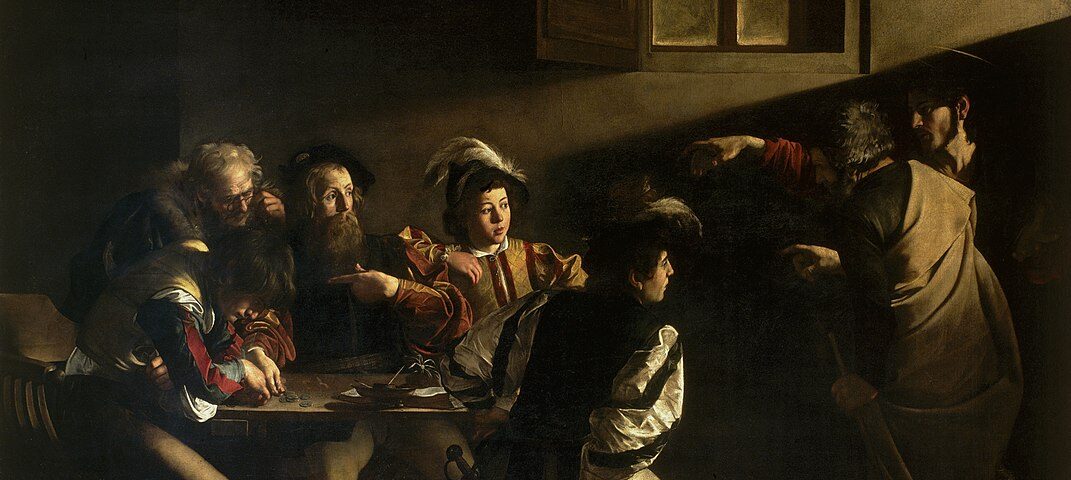
A. In gathering the Customs of all Merchandize that came by the Sea of Galilee, and the Tribute that Passengers were to pay that went by Water; for which Purpose the Office was kept by the Sea-side. And here it was that Matthew sat at the Receipt of Custom, when our Saviour called him to be a Disciple (Matt. 9:9).
Q. Is it probable he had any Knowledge of our Saviour before he was called?
A. Yes; living at Capernaum, the Place of Christ’s usual Residence, where his Miracles and Sermons were frequent, he might, in some Measure, be prepared to receive the Impressions which our Saviour’s Call made upon him.
Q. What made St. Matthew’s Compliance with our Saviour’s Call so very valuable?
A. In that he exchanged rich and plentiful Circumstances, and a gainful Trade, for Poverty and Hardship: quitting whatever the World counts dear, and preferring the Attendance upon the Son of Man, who had not where to lay his Head, before all the Advantages of Interest and Relations.
Q. Wherein appeared his great Contempt of the World?
A. Not only in quitting a plentiful Estate in order to become our Saviour’s Disciple, but in the great Abstemiousness he exercised in the remaining Part of his Life; refusing to gratify himself with the ordinary Conveniences, as well as with the Pleasures of it; his common Diet being Nothing but Herbs and Roots, Seeds and Berries.
Q. How did he express his Satisfaction in becoming our Saviour’s Disciple?
A. By entertaining our Saviour and his Disciples at a great Dinner at his own House, whither he invited all his Friends, especially those of his own Profession; piously hoping that they also might be influenced by our Saviour’s Converse and Company.
Q. What may we learn from our Saviour’s conversing so familiarly with the worst of Men, which gave such Offence to the Pharisees?
A. That the greatest Sinners are Objects of our Pity, rather than Contempt; and that we ought not to grow faint in our Endeavours for their Conversion, as long as the wonderful Patience of God bears with them. That our Company is most suitable, where the Necessities of Souls do require it. And that, in order to reclaim Sinners, we ought to prefer Acts of Mercy and Charity before all ritual Observances, and the nice Rules of Persons conversing with one another.
Q. Wherein appeared that Humility for which St. Matthew was remarkable?
A. In that when the other Evangelists, describing the Apostles by Pairs, constantly place him before St. Thomas, he modestly places himself after him. And when the Rest of the Evangelists record the Honour of his Apostleship under the Name of Matthew, but speak of his former sordid Course of Life under that of Levi (Mark 2:14; Luke 5:27), he himself sets it down, with all its Circumstances, under his own proper and usual Name.
Q. Though St. Matthew continued with the Rest of the Apostles till after our Lord’s Ascension, what became of him then?
A. For the first eight Years he preached up and down Judea, endeavouring to convert his Brethren, the Jews, to the Faith of Christ. And when he betook himself to the propagating the Gospel among the Gentiles, Æthiopia is generally assigned as the Province of his Apostolical Ministry; where by Preaching and working Miracles, he mightily triumphed over Error and Idolatry: In which Country it is most probable he suffered Martyrdom, but by what Kind of Death, it is altogether uncertain.
Q. How was he qualified to write his Gospel?
A. By being an Eye-witness of the Life and Actions of our blessed Saviour, and by being free from those Temptations which prevail upon Men to impose upon others.
Q. When and upon what Account did St. Matthew write his Gospel?
A. While he was in Palestine, about eight Years after the Death of our Saviour, at the Intreaty of the Jewish Converts, and, as Epiphanius tells us, at the Command of the Apostles. And being designed for the Use of his Countrymen, he writ it in the Hebrew Language, as is generally asserted by all Antiquity. It was very quickly translated into Greck; some attributing it to St. John, others to St. James the Less; the Apostles approved the Version, and the Church has received it as authentic (Iren. lib. 3, cap. 1; Cyril, Hieron. Catech. 14, §8; Euseb. lib. 3, c. 24, 39; lib. 6, c. 25).
Q. What may we learn from the Observation of this Festival?
A. That there is Mercy for the worst of Sinners if they forsake their evil Ways, and become obedient to that Call, which their own Consciences, and the Exhortations of God’s Ministers, so frequently sound in their Ears. That true Repentance consists in such a Change of the Heart, as produces such Actions as are agreeable to God, and avoids such whereby we have formerly offended him. That Poverty and Want are cheerfully to be embraced, when they lie in the Way of our Duty. That it may be sometimes advisable to punish our past Extravagancies by forbearing the ordinary Conveniences and Accommodations of Life. That if we would enter into the true Spirit of this Festival, we should imitate that Humility and Contempt of Riches, which was so remarkable in this blessed Apostle. That we should keep our Minds free from Covetousness, and raise them above the World, the most dangerous Enemy to our Salvation.
Q. Wherein consists the Nature of Covetousness?
A. In an immoderate and craving Love of Riches, which shows itself in an eager and insatiable Desire after the Things of this World; though we employ no indirect Means to obtain them; but is then complete, when we use any unlawful and dishonest Ways to grow Rich, and are anxious to acquire the good Things of this Life, even though we neglect those which are infinitely more valuable. When we are sordid, and cannot find in our Hearts to enjoy what we possess; or if we do, spend it upon our Lusts, and never suffer those who are in Want to share with us. When we make Gold our Confidence, and trust in it as our chief Happiness.
Q. What are the mischievous Effects of this Vice, which our blessed Apostle entirely conquered?
A. It alienates the Mind from God, and takes Men off from the Care of their Souls; we cannot serve God and Mammon (Luke 16:13). It obstructs all those Passages through which the Consideration of Religion should enter into our Thoughts; it is the Parent of most of the Fraud and Injustice, Cruelty and Oppression, Falsehood and Perjury, that is committed in the World. It makes Men fail in the Hour of Temptation, so that, when they should quit all for the sake of Religion they go away sorrowful, because they have great Possessions. It is very apt to blow us up with Pride, and to make us overvalue ourselves; and, by the same Reason, inclines us to despise and contemn those who want the same Advantages. It does but too frequently administer to Intemperance and unlawful Pleasures, and is made instrumental in gratifying some irregular Passion that governs our Minds.
Q. Whence appears the Unreasonableness of this Vice?
A. In that it is an endless and insatiable Appetite, and consequently can never attain that Contentment and Satisfaction it proposes. Besides, it pursues Happiness by false Measures, for this doth not consist in Abundance; and though the Luxury of Life is boundless, yet the Necessaries and Conveniences of it lie within a small Compass. Great Riches are so far from prolonging our Lives, that they rather shorten them, either by Labour and Care in getting them, by Anxiety and tormenting Cares in keeping them, or by Trouble and Vexation in losing them; they neither make us better nor wiser, but are dangerous to our Virtue, and tempt us to play the Fool. They cannot preserve us from Contempt nor Misfortunes, from Diseases or Pains; they neither make our Friends more faithful, nor our Children more dutiful, neither can they afford us any Comfort when we stand most in need of it, at the Hour of Death. But we must give a strict Account at the Day of Judgment, both how we have got them, and how we have used them.
Q. What is the best Means to overcome this Vice?
A. To employ our chief Care and Solicitude about the Things of the next Life, because great in themselves, and of an eternal Duration. To put our Trust and Confidence in God, who hath promised, if we seek his Kingdom and the Righteousness thereof, all these Things shall be added unto us (Matt. 6:33). To be content with such Things as we have, and to rely upon Providence by the Use of Just and lawful Means to increase them as he shall think fit. To consider the Uncertainty of Riches, that they make themselves Wings and fly away; and that we can, by no human Means, secure the Enjoyment of them. That if we could fix them, yet that Life is always upon the Wing, and when we have heaped up Riches, we cannot tell who shall gather them (Psalm 139:6). To be charitable in some Measure to the Proportion of what we have received; to be rich in good Works, and ready to distribute.
The Prayers
I. Against Covetousness.
Ο Almighty God, who by thy blessed Son Against didst call Matthew from the Receipt of Custom to be an Apostle and Evangelist, grant me Grace to forsake all covetous Desires, and inordinate Love of Riches; and to follow the same thy Son Jesus Christ, who liveth and reigneth with thee and the Holy Ghost, one God, World without End. Amen.
II. For the increase of Christian Virtues.
Almighty and everlasting God, give unto me the Increase of Faith, Hope, and Charity; and that I may obtain that which thou dost promise, make me to love that which thou dost command, through Jesus Christ our Lord. Amen.
III. Against Covetousness.
Almighty and most gracious God, in all my Passage through this World, and my manifold Concerns in it, suffer not my Heart to be too much set upon it. Let not my pursuit of temporal Things rob me of that Time which ought to be employed in the Concerns of my Soul, nor divert me from the serious Thoughts of the World to come. Let not the Cares of this Life, nor the Importunity of Business, make me neglect divine and spiritual Employments, nor disturb me in the Performance of them. Make me charitable to those that are in Want, willing to distribute, and ready to communicate to the Necessities of my Brethren. Let me esteem no Loss comparable to that of Innocence and of a good Conscience, nor harbour any Fear like that of thy Displeasure, and of the intolerable and eternal Pains of Hell-fire. Let thy Laws, O my God, direct all my Steps in my greatest Dangers; and make me more studious in all my Counsels of what is lawful for me, than of what seems serviceable and advantageous to my worldly Circumstances. Let me never stoop to any Sin, in Hopes to advance or preserve those Riches which thy bounty hath bestowed upon me, that my Mind, being purged from all covetous Affections, my great Care may be, to provide for Eternity, and to lay up a Treasure in Heaven, which faileth not: That when my Body shall tumble into Dust, my Soul may be received into those eternal Mansions of Glory, which thou hast prepared for all that love and fear thee through Jesus Christ our Lord. Amen.
IV. Bp. Taylor, For Humility.
O Lord God, who resistest the Proud, and givest Grace to the Humble; endue me with such Humility of Soul, and Modesty of Behaviour, that my Looks may not be proud, nor my Thoughts arrogant, nor my Designs ambitious; but that being restrained from all Vanity and Pride, and my Affections weaned from a great Opinion and Love of myself; I may trust in thee, follow the Example of my blessed Master, and receive those Promises thou hast made in our Lord and Saviour Jesus Christ. Amen.