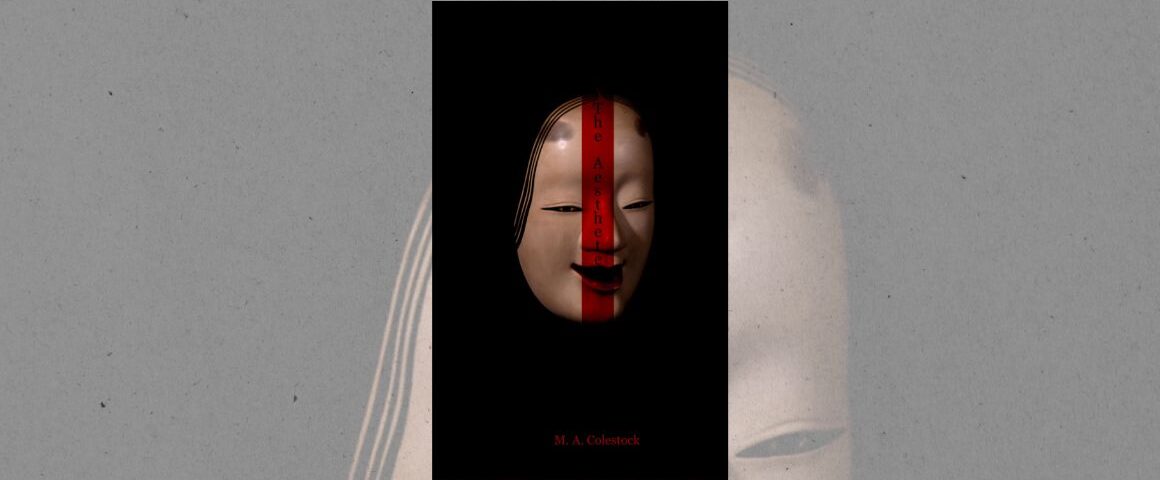
The Aesthete. By M. A. Colestock. Independently published, 2026. 427 pp. $28.99 (hardcover), $15.99 (paper).
I imagine most people, if asked, would say they have never met an aesthete before. An aesthete is defined as “one having or affecting sensitivity to the beautiful especially in art,” and given that most people today do not deliberately orient their lives around beauty as such, in terms of the beautiful, it seems to follow that the aesthete, as a category, is scarcely anywhere to be found in our modern world. The title of this novel, then, will probably strike readers as somewhat exotic, mysteriously evocative—who is the aesthete, in concrete words and actions, and what are we to make of this person?
The story’s approach to this question might appear incongruously mundane by comparison. At its core, it is about a group of college students who are on campus for summer break. In central focus is a young woman aspiring to be a photographer, Jennifer, who makes her aesthetic sensibilities known by continuing to photograph in film rather than moving on to digital photography like the rest of the campus club. Her search for promising subjects leads her to cross paths with another young woman named Tabitha, an architecture major. After their first meeting, the story develops around their subsequent encounters and the small network of friends and acquaintances shared between them.
The novel is minimalist in nature—its plot largely consists of characters meeting and talking with one another, comprising no outsized dramatic events or external forces; narrative descriptions are simple yet effective at painting the scene, though at times the use of similes is prevalent to the point of feeling somewhat distracting; dialogue, too, is spare and grounded. In short, this book will not reward readers who are looking for a temporary diversion that only stimulates, asking nothing of them. Indeed, clear as it is that the author has no intention of gratifying thrill-seekers with this work, sustained attention will be required to derive anything of value from it. Those who instead breeze through it will be left wondering, as in real life, what the point of it all was.
On the most superficial reading, it could be said that the aesthete is merely a gadfly who irritates everyone unfortunate enough to enter his orbit. Certainly Jennifer spends much of her time exasperating Tabitha and other fellow students with her oblique approach to conversation, feeding the suspicion that it is all for the sake of her own personal amusement. But to be more charitable, the aesthete seeks beauty, and not just beauty, but the highest beauty there is. The question posed by the novel is, where is that beauty to be found, and are we even able to find it? That the title speaks of “The Aesthete” in the singular might lead some to conclude that this question applies only to Jennifer, the most obvious aesthete in the story. In truth, however, a conscious habit of seeking or thinking about beauty as beauty is not required in order to be an aesthete. Properly speaking, all human beings, insofar as they are naturally oriented toward beauty, goodness, and truth (all of which are distinct facets of the same underlying reality), are aesthetes. So it is that everyone in this novel, and indeed, the world, is looking for something, that highest beauty. Where they seek it varies, and whether any of the characters in The Aesthete find it is best left to the reader’s own discernment.
The source of this novel’s appeal is difficult to pin down. Nothing much happens in the way of dramatic action. The main characters are, in a number of ways, unlikable. And yet it is for precisely this reason that they are appreciably human, complex, inviting different perspectives on their nature and motivations. As a portrait of humanity framed around particular questions of beauty and the aesthetic, the novel rewards careful thought. For those who are looking for more than entertainment, those who are open to a greater challenge than is typically found in modern literature of all kinds, both written and visual, I commend it to your attention.